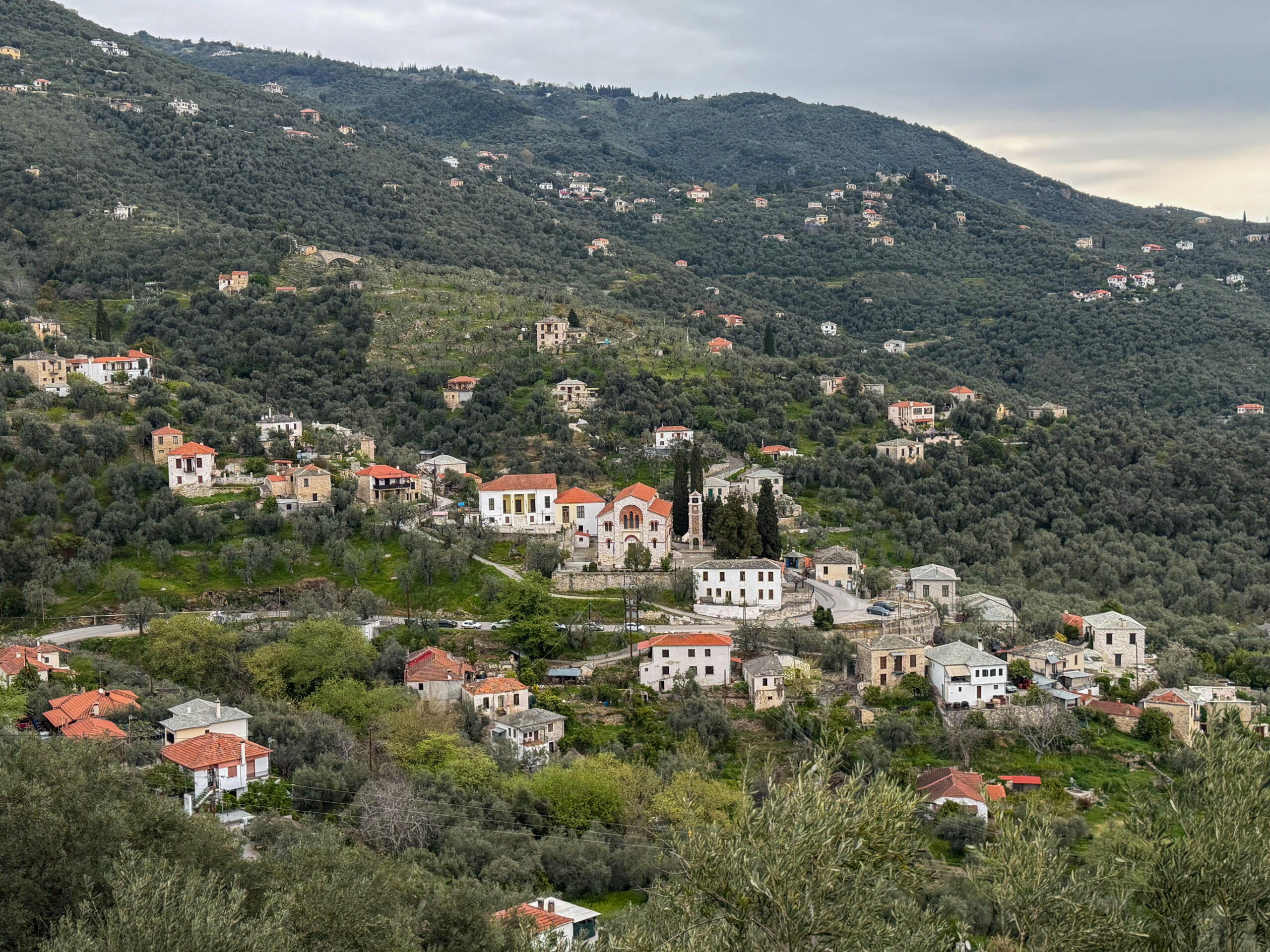
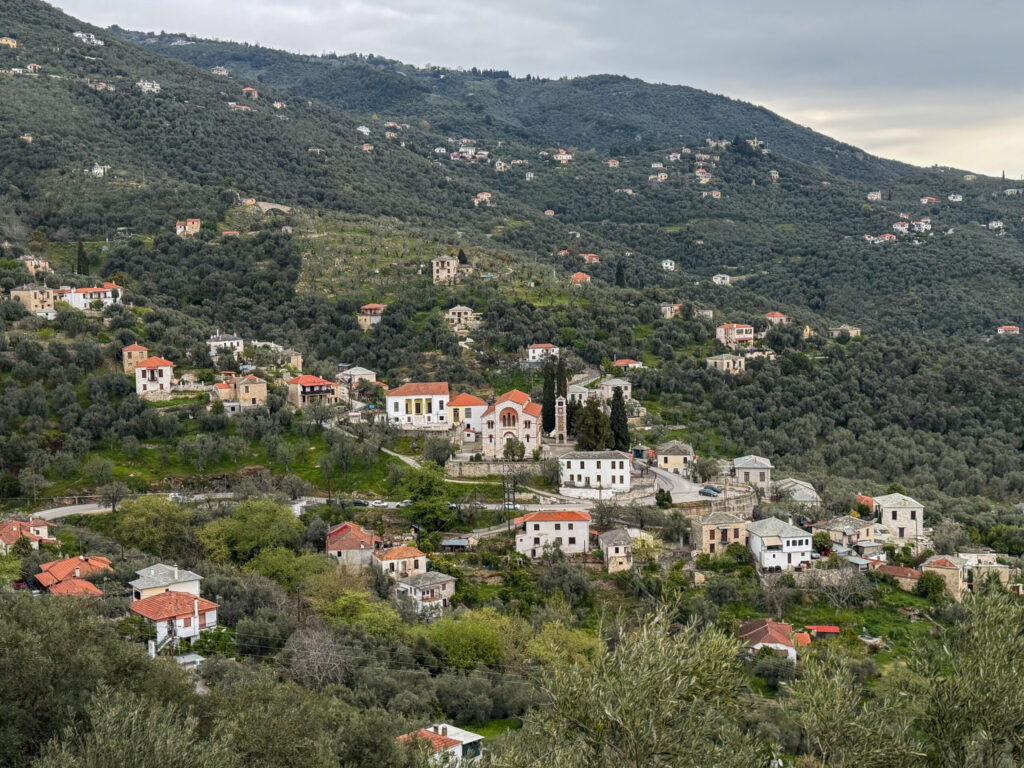
From Portaria and Makrinitsa to Milies, Pinakates and Lafkos, this is the mountain that spoils you — with villages, flavours and stops you should not miss in one of Greece’s most irresistible destinations
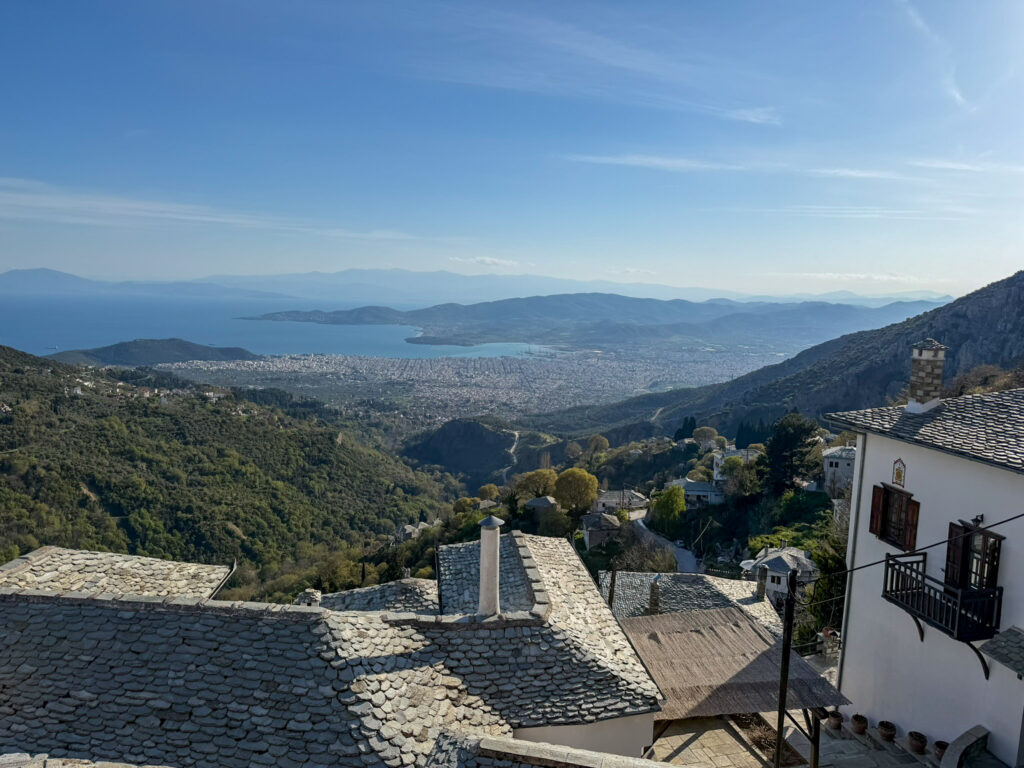
Pelion is not the kind of place you “do” in one trip. You unfold it. Bend by bend, square by square, footpath by footpath.
You leave Volos behind and start climbing, and almost immediately the landscape begins to shift. The sea drops out of sight — though never for long, as it keeps returning to the frame in sudden, cinematic glimpses — the green deepens, springs can be heard before they are seen, and stone-built houses emerge between chestnut, plane and beech trees. That is usually the moment when you understand why Pelion was imagined as the summer home of the gods and the mountain of the Centaurs. There is something mythic about it, yes, but never overblown. Its beauty keeps a human scale.
One of Pelion’s great luxuries is that it does not belong to a single season. In spring, it smells of blossom, damp earth and wild herbs. In summer, it offers relief when the rest of Greece feels sun-struck. In autumn, it turns into a colour chart so beautiful it will have you pulling over for yet another photo. In winter, when snow dusts the higher slopes, its villages can look almost Scandinavian — if Scandinavia came with fireplaces, spetsofai and spoon sweets.
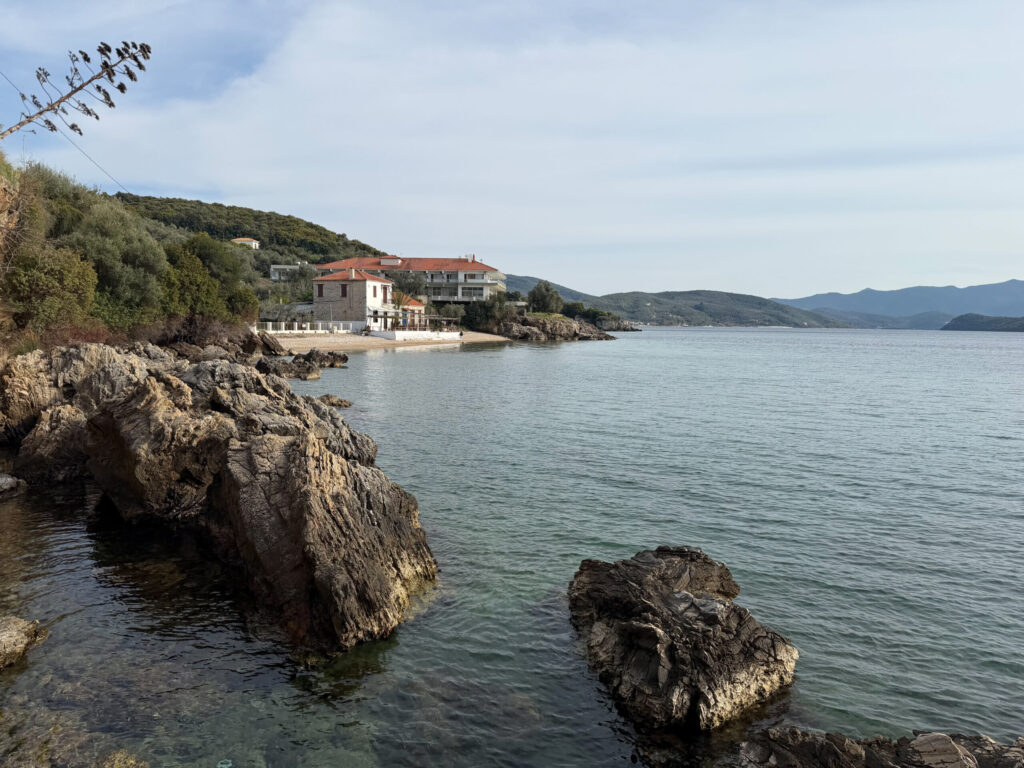
And then there is the sea. Pelion is a mountain, but it is also profoundly maritime. On the Pagasetic side, the water can feel calm and lake-like; on the eastern edge, it opens out into the raw, clear Aegean. Pelion is the shade of village squares, the coolness of old fountains, the lacework of coastline seen from above, the plane trees that seem to have been there forever. Above all, though, it is a vast network of walking paths: a mountain you can experience in comfortable shoes, without needing to be a mountaineer. Sometimes, all it asks is that you feel like getting a little lost.
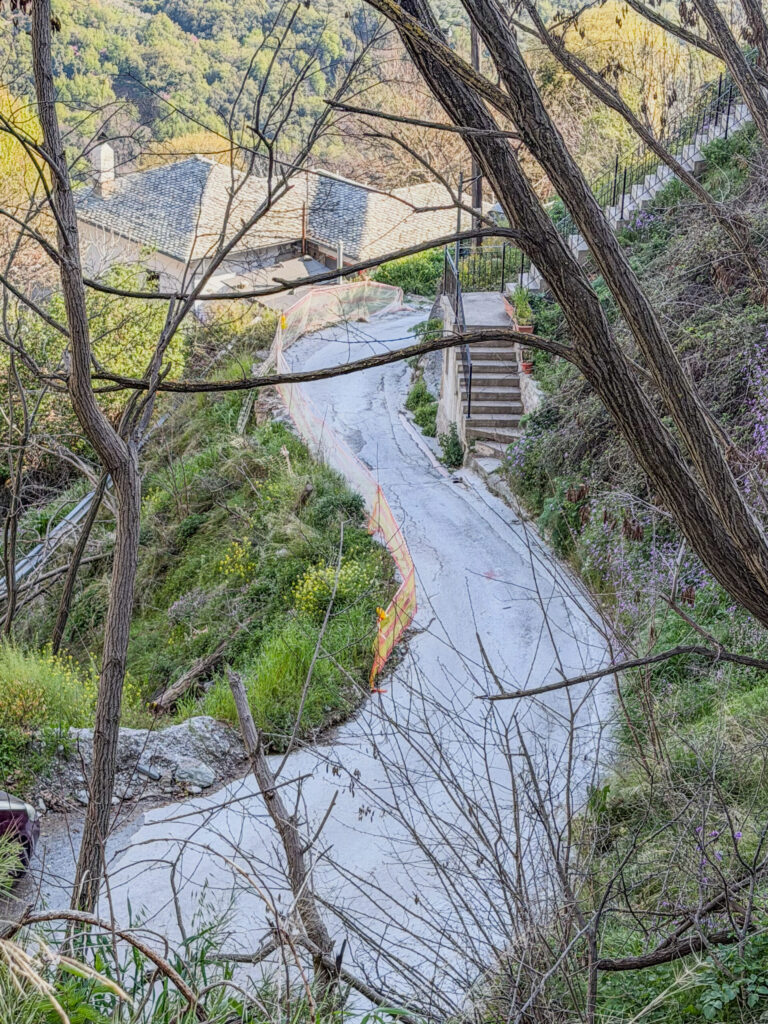
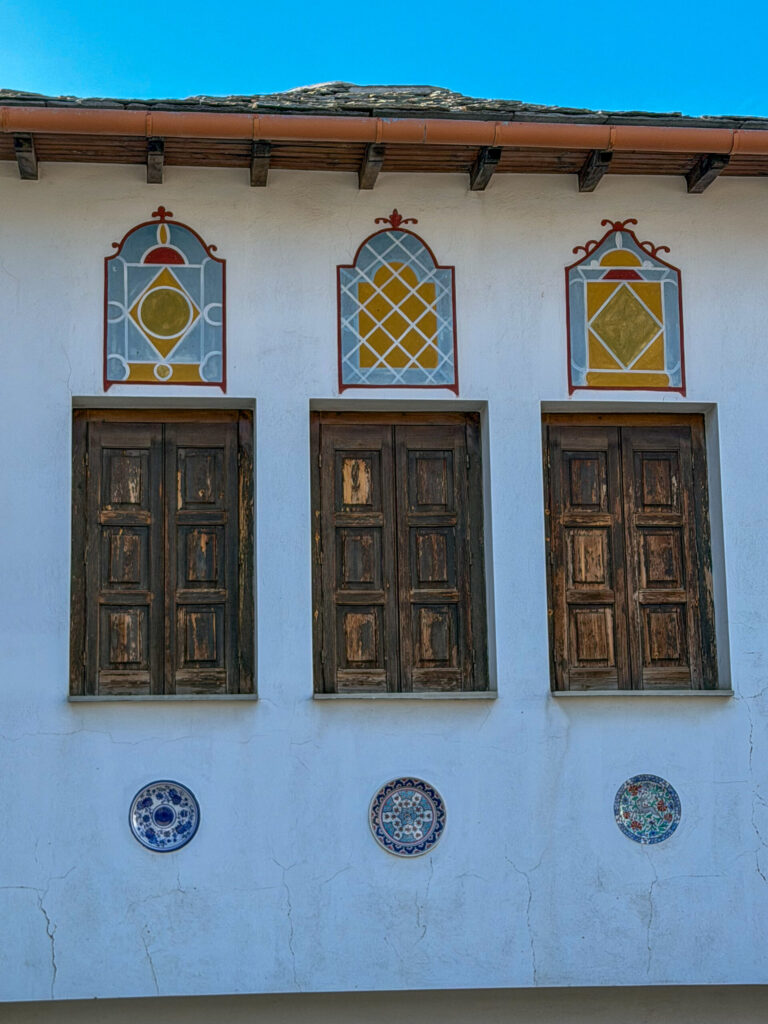
The full Pelion loop covers around 140 kilometres, but distance means very little here. Time is measured differently: in stops for coffee in a village square, in cold spring water, in photos on stone-paved kalderimia, in a glass of tsipouro that becomes an excuse to talk to whoever is sitting at the next table. Its villages seem to compete in beauty without ever trying too hard. Some open dramatically towards the Aegean, others smell entirely of mountain air; some carry their history with pride, while others win you over precisely because they do not announce themselves.
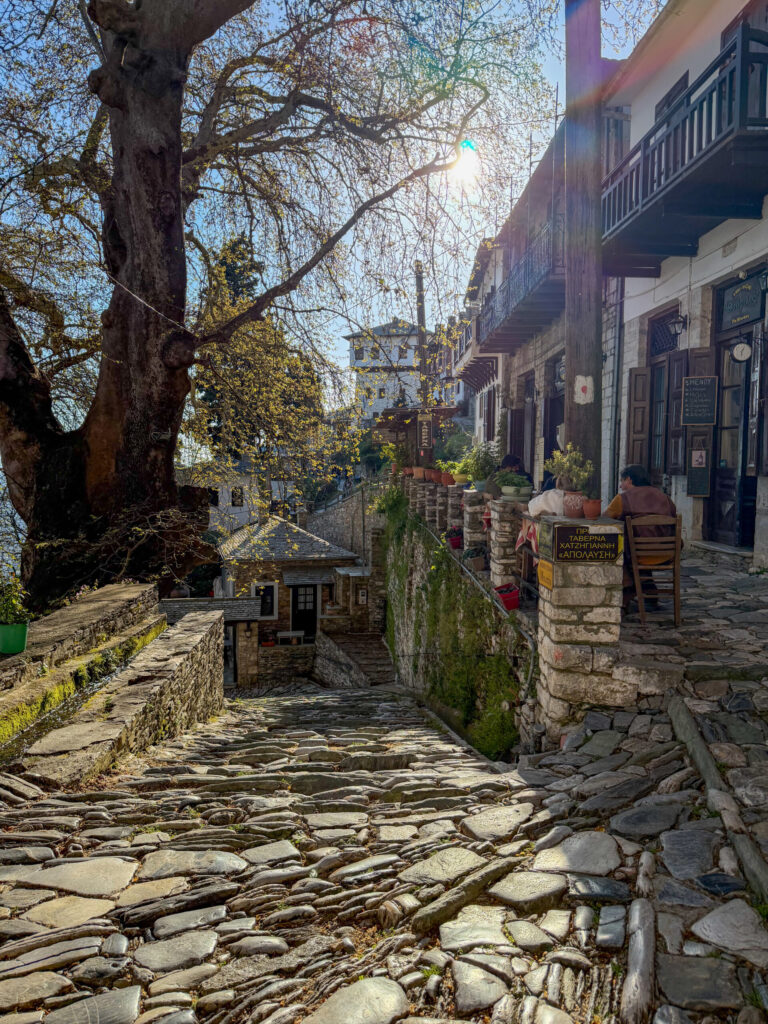
Portaria: the elegant first stop
First comes Portaria. Close to Volos, easy to reach and quietly cosmopolitan without losing its traditional character, it has the classic Pelion formula in all the right proportions: cobbled lanes, mansions, a beautiful square, well-preserved buildings and a strong sense of place.
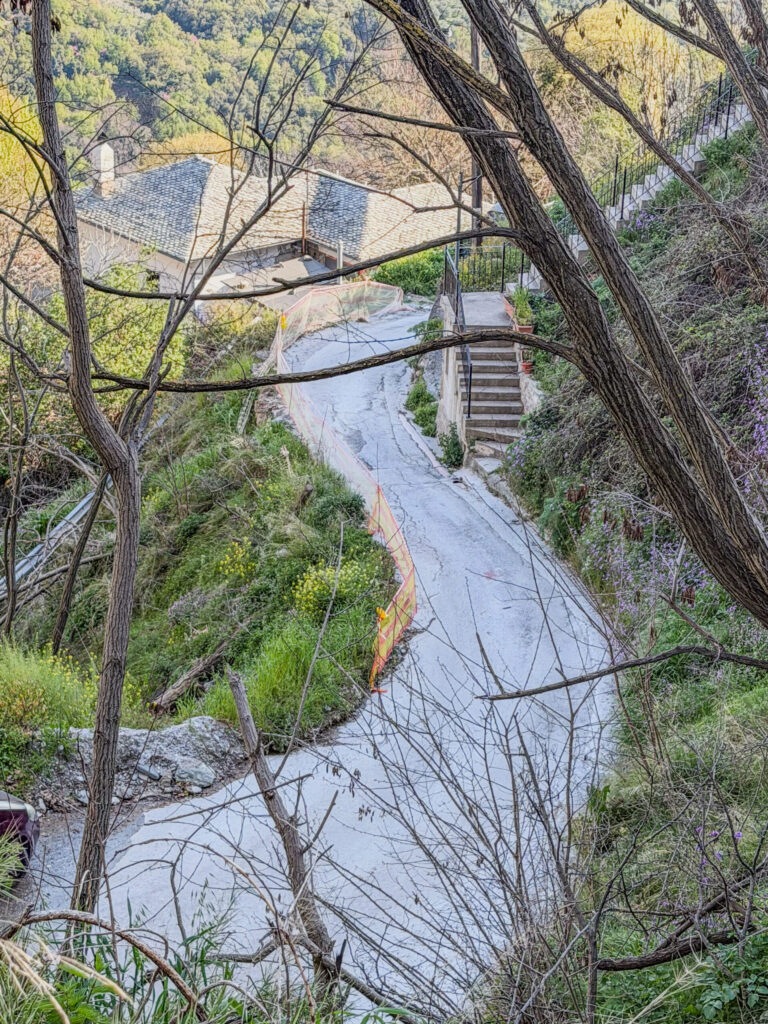
Around the central square, landmarks such as the Athanasakeio Nursery School, the Zoulia Mansion, the Tsopoteio School and Panagia Portarea — an 11th-century Byzantine chapel, all that remains of the monastery around which the village was built — are reminders that tourism here never swallowed the village whole.
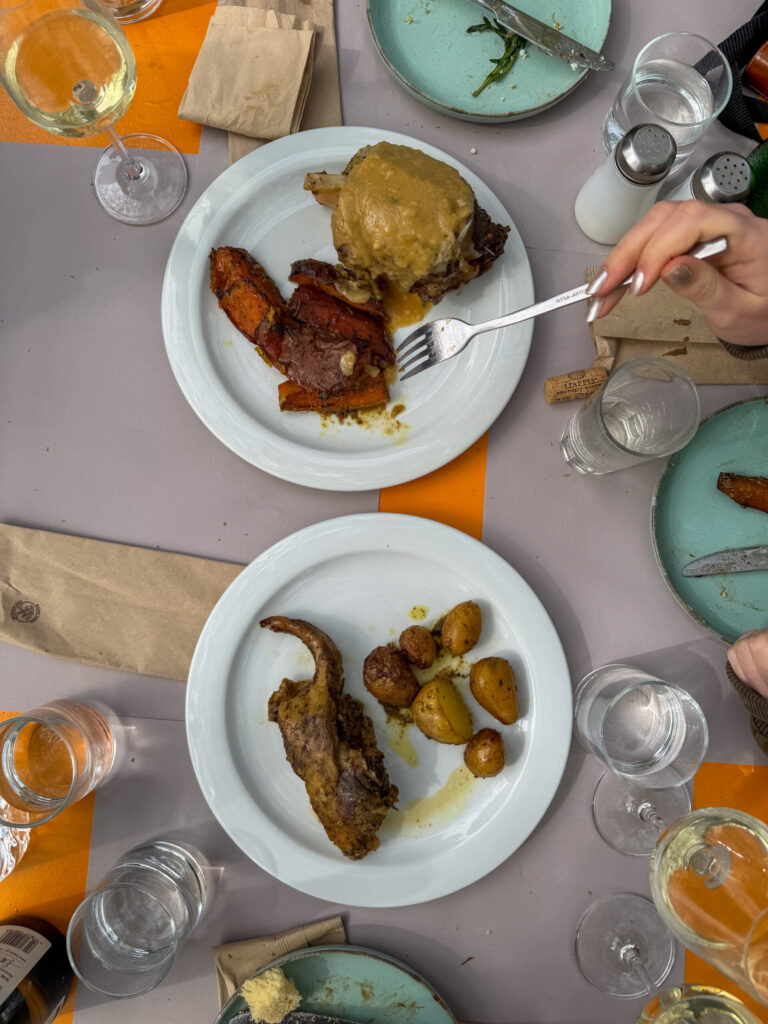
Portaria is also where you should stop for lunch at Kritsa, run by Eleni Karaiskou, one of the most genuinely satisfying food addresses in Pelion. Nothing here tries to be anything other than itself. Vegetables and eggs come from the farm, the pies are made with hand-rolled pastry, the spetsofai is prepared with the proper local sausage, and dishes such as slow-cooked ewe with pasta, boumbari, rabbit baked in a clay pot, kid goat with potatoes and a glorious galaktoboureko set the tone immediately. For an overnight stay, Kenta Mountain Hotel makes an excellent base — warm, understated and perfectly in tune with the landscape.
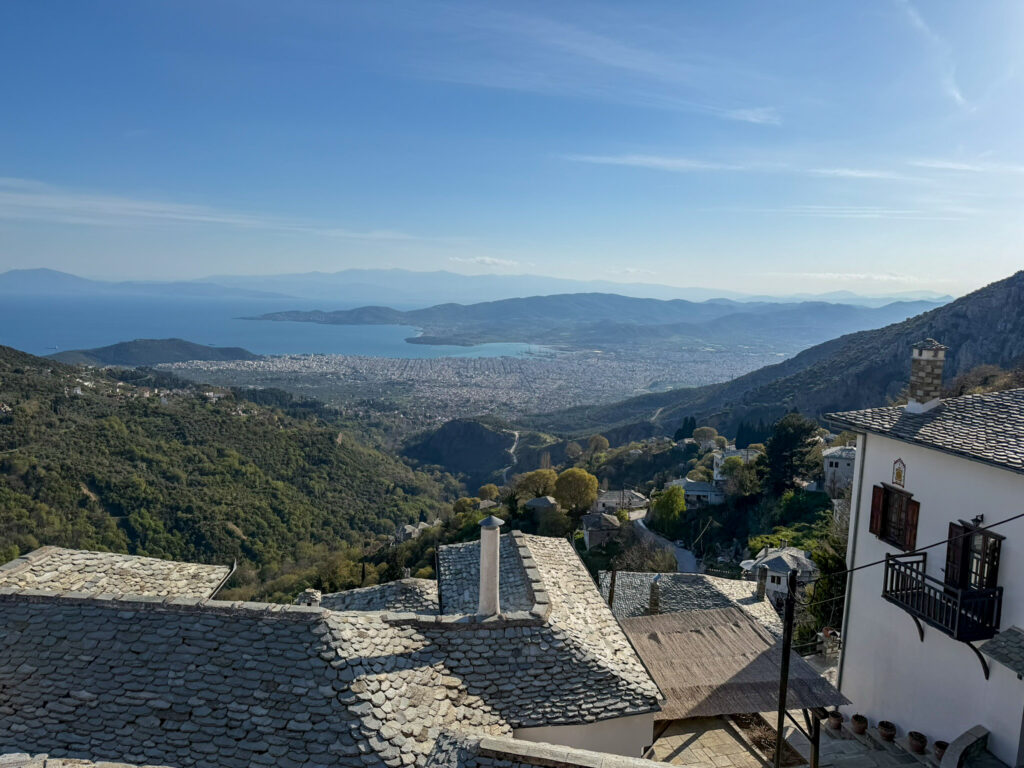
Makrinitsa: the balcony of Pelion
Almost next door, Makrinitsa belongs to another category when it comes to views. It was not nicknamed “the balcony of Pelion” by accident. Built amphitheatrically into the hillside, with the Pagasetic Gulf spreading out below, it is made for slow walking.
Stone paths, mansions, carved fountains and little corners that gaze down at Volos from above give the village an almost theatrical sense of composition. In the main square of Agios Ioannis, under the plane trees and beside the famous fountain with its four bronze lion heads — known as “Immortal Water” — you understand what Pelion’s visual poetry really looks like when left unfiltered.
For sightseeing, make time for the Topali Mansion, now home to the Museum of Folk Art and History, the medieval Skotiniotis Tower, and Koukourava, the lower quarter where old fulling mills and tanneries still speak of the village’s working past.
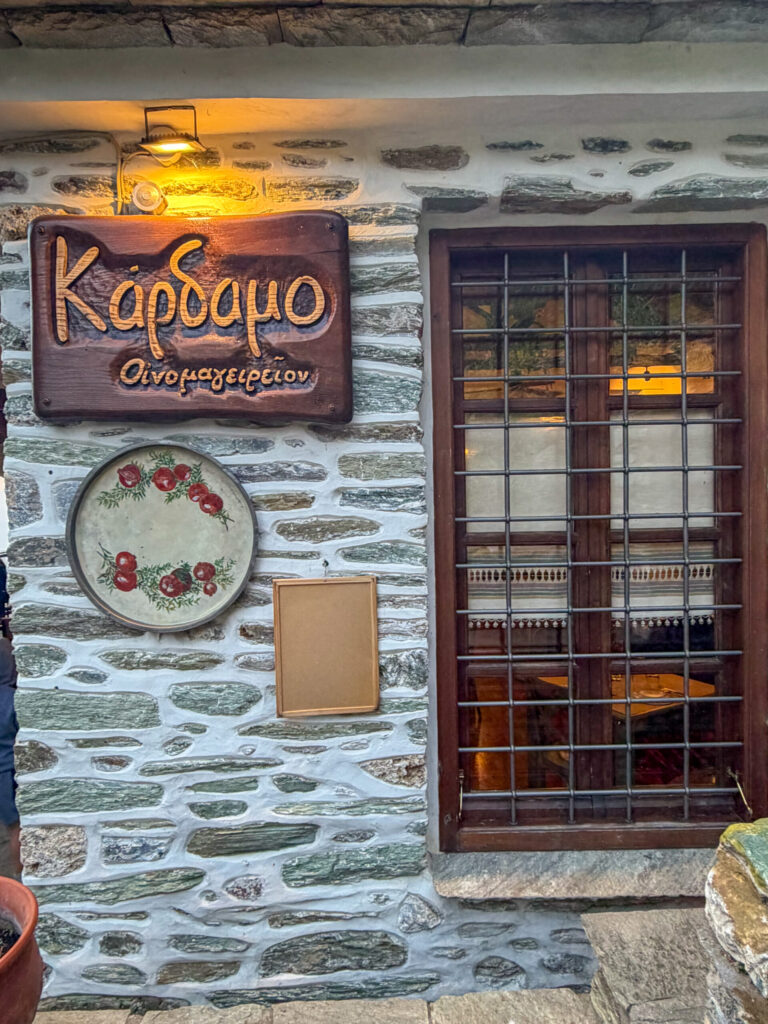
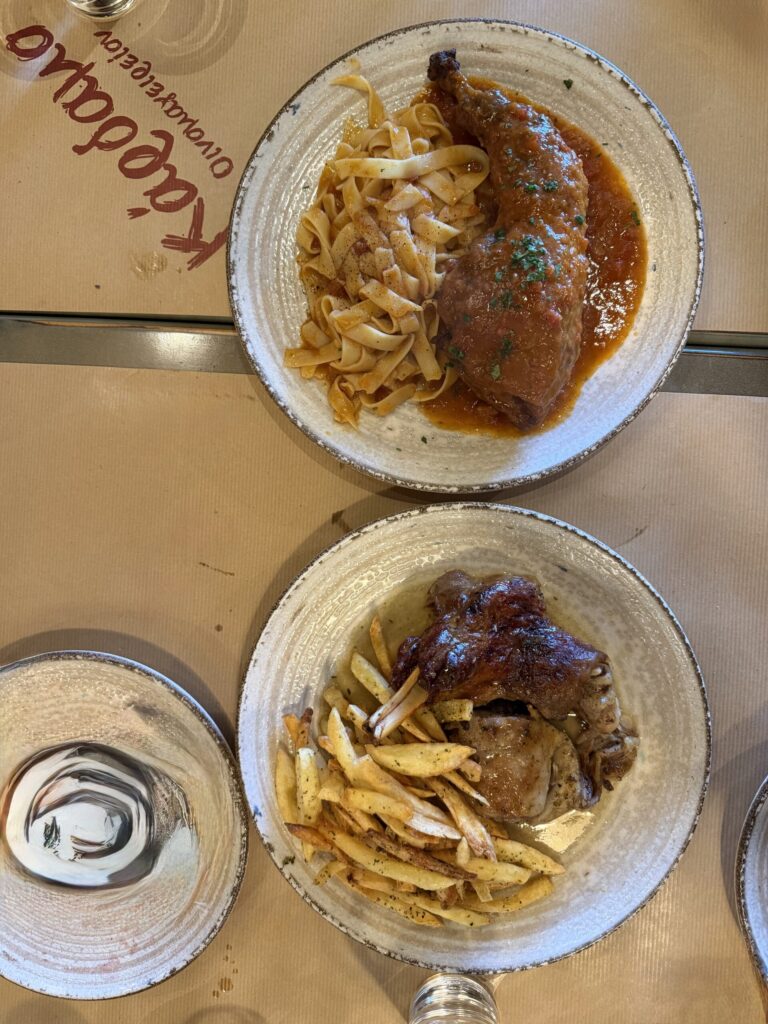
For food, Kardamo offers a welcome change of pace. Slightly removed from the bustle of the square and with front-row views over Volos, it serves a more contemporary comfort cuisine: handmade pasta with beef, zucchini fritters, braised wild boar, mushroom tagliatelle, a reworked version of spetsofai, goat and rooster.
Milies: a village with depth
From there, Pelion begins to open up like a proper narrative. Milies is one of those villages with real depth — not just beauty. A former regional centre with mansions, history and the intellectual aura of the Greek Enlightenment, it still carries the legacy of the Milies School, founded in 1814 by Anthimos Gazis, Grigorios Konstantas and Daniil Philippidis.
The Church of the Taxiarches alone is worth the visit: remarkable frescoes, curious acoustics, upside-down clay jars hidden in the domes, underground wells, and that wonderfully unusual zodiac depiction that seems to whisper that Pelion has always made room for mystery.
In Milies, Korbas Bakery is a non-negotiable stop for pies, cheese bread, onion olive bread — and queues that are usually justified. For dessert, coffee or a late drink, Anna, Na Ena Milo has become something of a local legend, with its retro interiors, Elvis memorabilia, old Greek advertising posters and an apple pie that feels exactly right for the setting.
As for where to eat, there are plenty of good options: Salkimi for grilled meats, zucchini fritters and wild boar when in season; Panorama for generous portions and excellent homemade greens pie; Aloni for lamb chops, spetsofai and buffalo soutzoukakia.
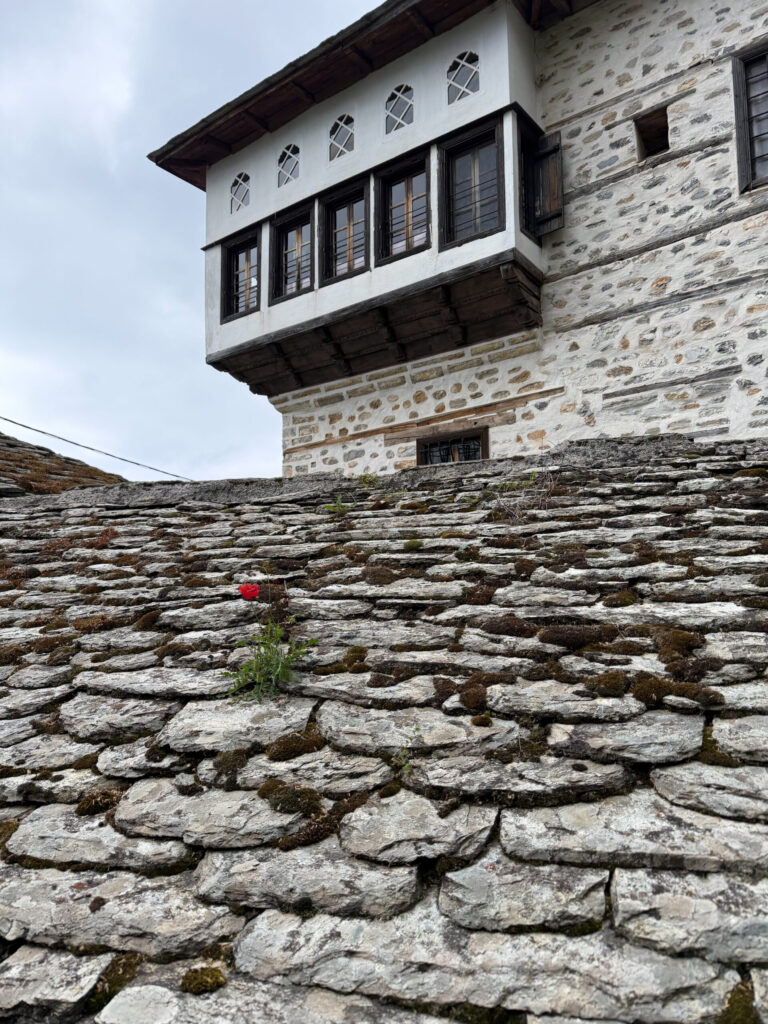
Vizitsa: Pelion in miniature
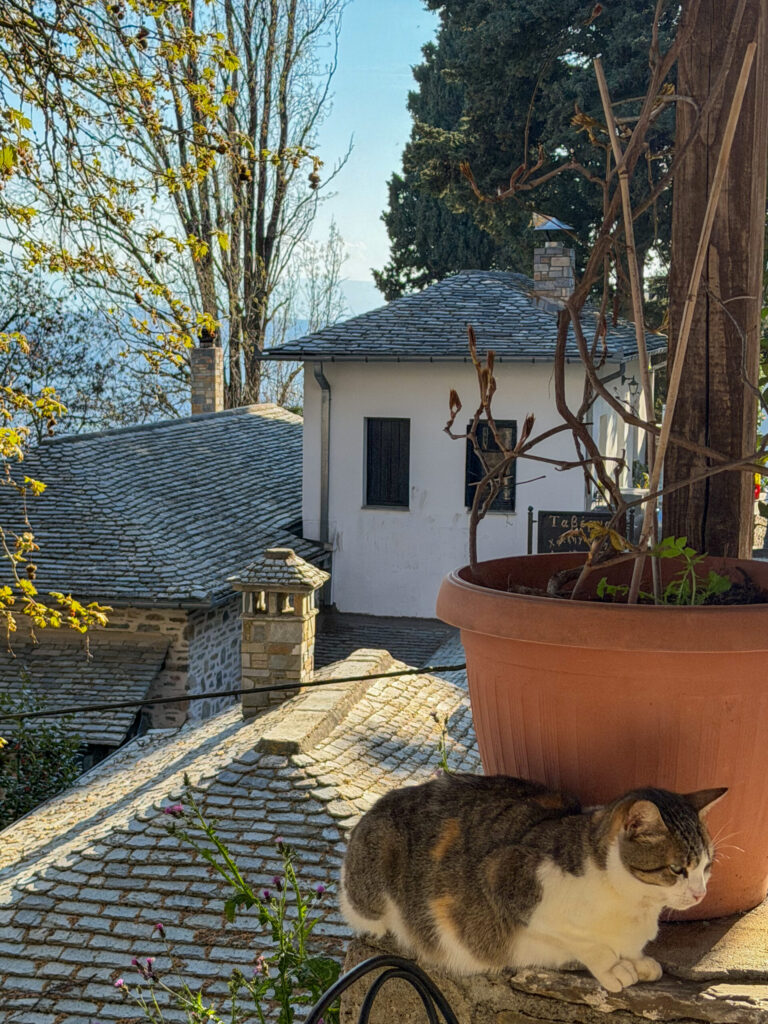
A little further on, Vizitsa feels like a distilled version of Pelion itself. A preserved settlement filled with mansions, stone fountains, churches and quiet corners, it is almost a miniature of the entire region. You do not need to “do” much here. Just walk to the covered fountain in the square, look up at the houses, and listen to the kind of silence that still has texture.
Agios Lavrentios: for a quieter kind of beauty
Hidden in thick greenery, Agios Lavrentios has a different energy — more inward, more artistic, perhaps partly due to the music festival that has made it known to people looking for something beyond the obvious. Its square, its mansions, its views and its sense of not having fully surrendered to tourism make it one of Pelion’s most appealing stops.
At Lotos, Mrs Frosso cooks generous, deeply traditional Pelion food: wild greens with eggs baked in clay, kid goat in parchment, goat baked slowly in the oven, pies, local galotyri and spoon sweets. Up on the square, Vasilikos kai Dyosmos offers a slightly more polished take on the same tradition, with a good wine list, a fireplace, views over the Pagasetic and dishes such as grilled talagani with fig jam, homemade pies and slow-cooked mains.
Pinakates: the village-discovery
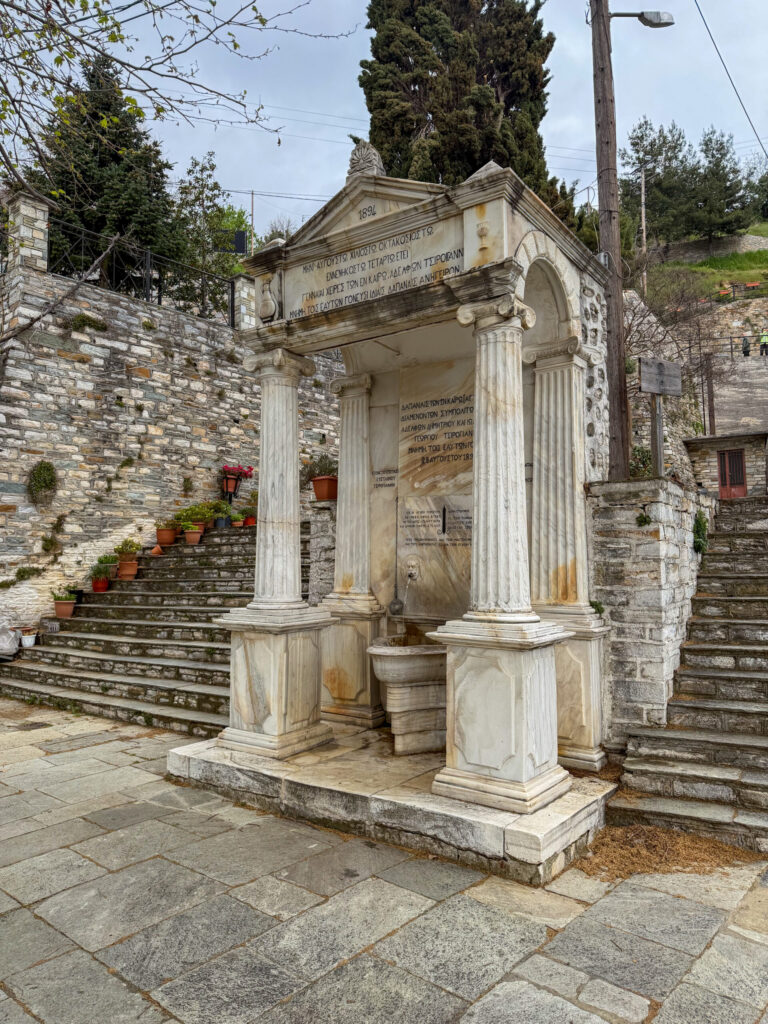
Pinakates is for those who love discovering villages that still feel slightly under the radar. Quiet, charming and beautifully composed, it looks out over the Pagasetic from a place of complete calm. The marble fountain in the square is one of its signature sights, but the real moment comes in the morning, when Marios’s old wood-fired bakery begins turning out bread, tsoureki, simit-style rings and whatever else inspiration has dictated that day.
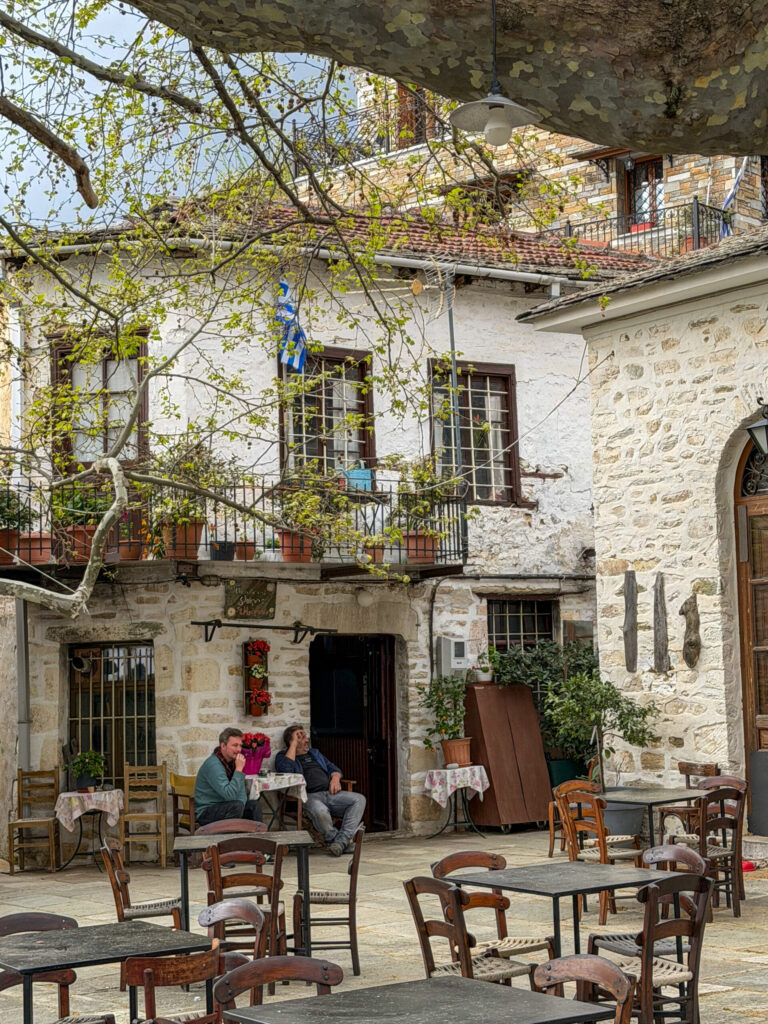
Directly opposite, Asorti, run by Alkmini, is the opposite of a generic souvenir shop: everything is handmade, embroidered and deeply local, including traditional Pelion costume pieces that somehow feel unexpectedly modern.
Lafkos and the sweetness of South Pelion
Head down towards South Pelion and Lafkos brings with it a different kind of softness. It has a beautiful square, old cafés, restaurants, cobbled lanes and two walking paths leading to the sea — one towards Agios Konstantinos, the other to Milina. Everything feels slightly toned down here: the pace, the volume, even the light.
At Ki Opou Paei, you can sit down without a plan and let lunch unfold on its own terms, while Xenonas Ton Chromaton captures something of the village’s calm, quietly bohemian spirit.
A little further down, Chorto, especially off-season, is one of those deeply peaceful places that stay with you. The sea in front of you, the sun sinking low, and that particular South Pelion mood which never tries to impress loudly, yet somehow settles inside you all the same.
Why Pelion stays with you
In the end, Pelion is not a destination for ticking villages off a list. It is a place that changes your rhythm. A place where you choose your square according to mood, wander into bakeries for pies that taste almost unfairly good, follow footpaths because a local told you, “Go — it’s worth it,” and eat a little more than planned because everything tastes of mountain, patience and wood smoke.
And every time you think you have understood it, another bend appears, another village, another view.
That, perhaps, is its real secret.