Anafi isn’t the easiest Cycladic island to reach. Nor is it the most glamorous or the most Instagram-famous. But it’s the kind of place that inspires fierce loyalty. The kind of island people return to summer after summer, as if keeping an annual date with old friends—or with a version of themselves that only exists here.
There is something irresistibly raw about Anafi. Dramatic landscapes, dazzling light, understated beauty and an intoxicating sense of freedom that’s becoming increasingly rare in the Aegean.
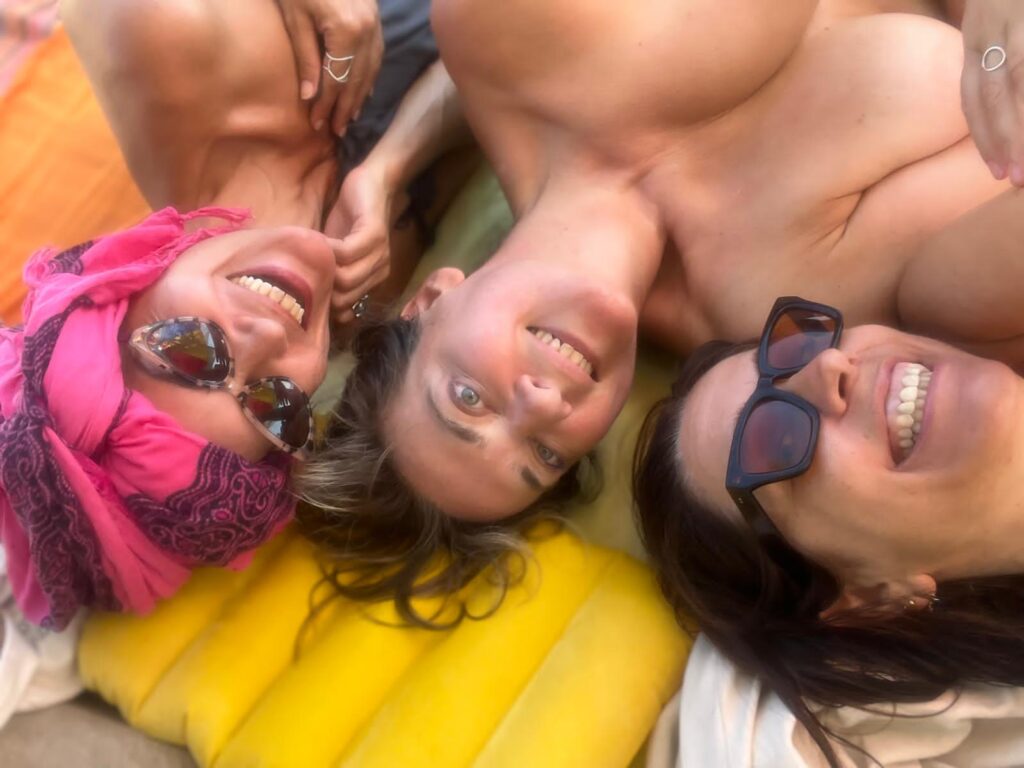
For years, the long ferry journey, the limited number of places to stay and its distance from everything we consider “convenient” acted as a natural barrier against mass tourism. The result is an island that still feels remarkably authentic, preserving the carefree spirit of the Cyclades in the 1990s—bohemian, unconventional and effortlessly sociable. Here, groups blend into one another, strangers become friends before the day is over, and conversations flow seamlessly from the beach to late-night drinks.
The dress code is simple: swimwear, a sarong and a pair of flip-flops. On Anafi, there’s no need to make plans. The island has a way of making them for you.
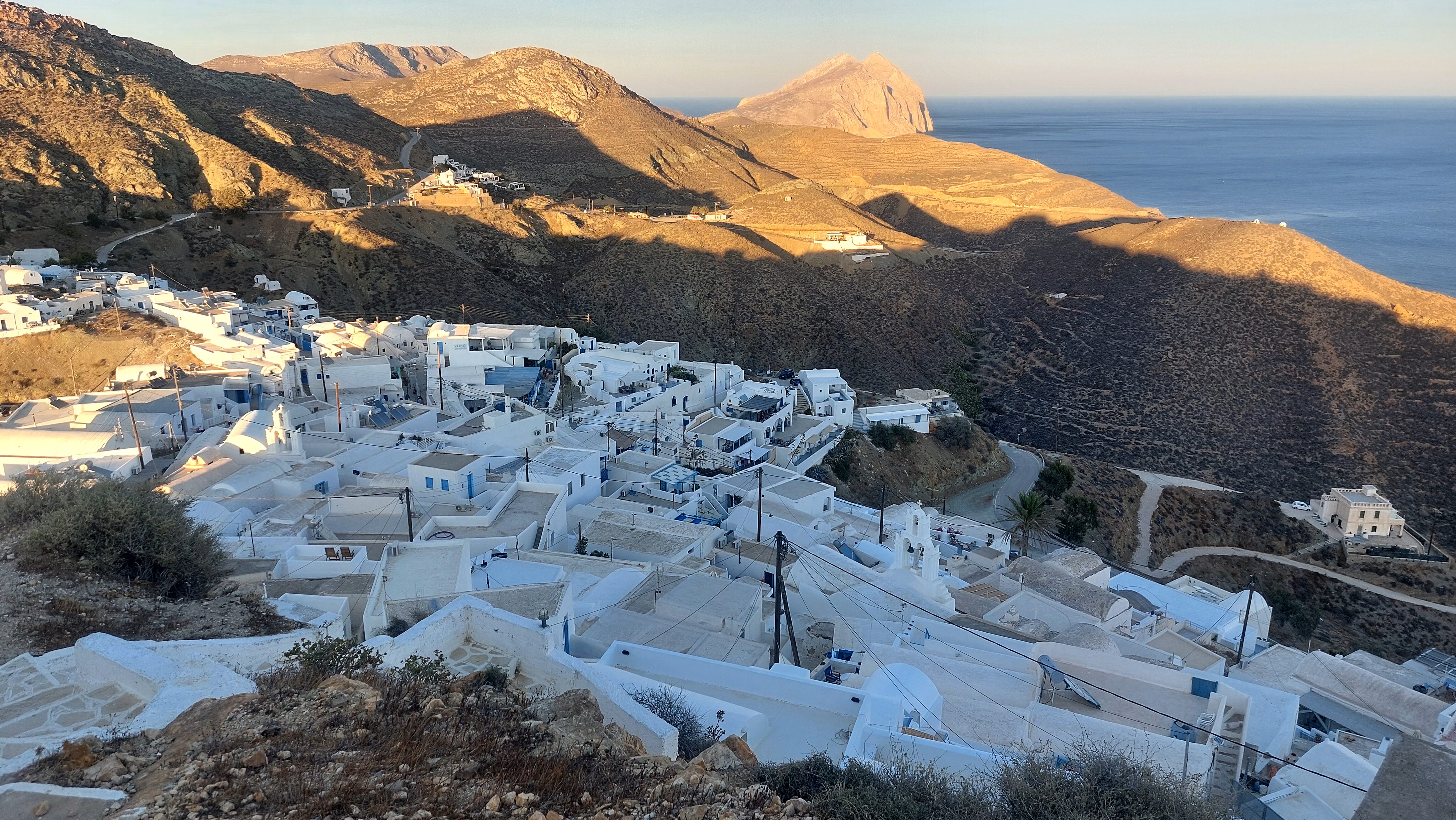
Your morning might begin with a swim at Roukounas, followed by an impromptu beach party at Kleisidi as the afternoon unfolds. By sunset, everyone drifts back to Chora, where the evening naturally begins in the village square before moving on to Mylos and, eventually, to the legendary Mandres—perhaps the Aegean’s most wonderfully alternative after-hours spot.
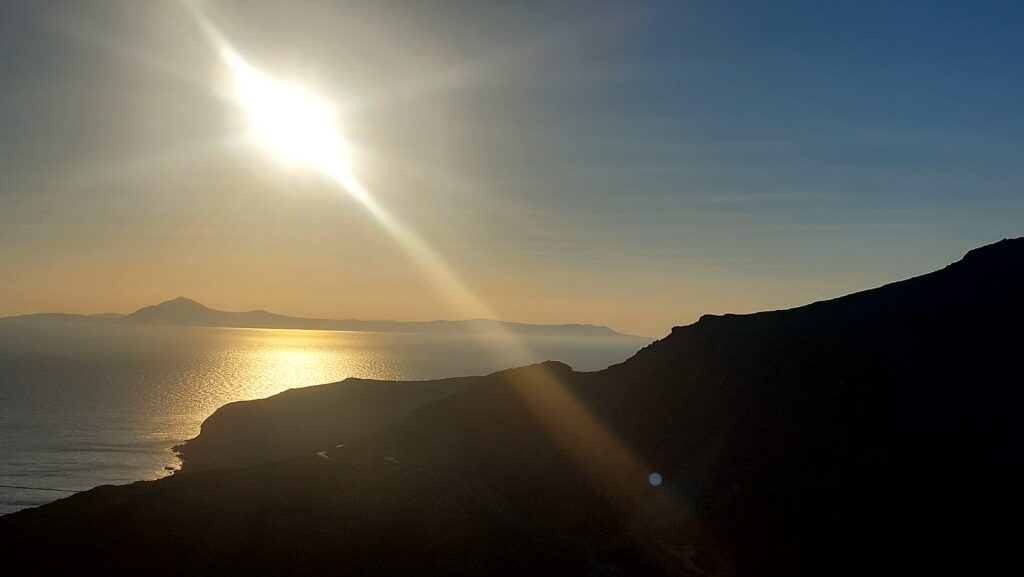
Some nights, though, you won’t need a bar or a DJ at all. Just a guitar, a couple of bouzoukis and an impromptu rebetiko gathering on Roukounas Beach, where music mingles with the sound of the waves until dawn.
It’s no coincidence that Anafi has long been a beloved destination for the LGBTQ+ community, attracting artists, creatives and free spirits from Berlin, London and Los Angeles, alongside travellers from all walks of life. Not because it’s fashionable, but because it remains genuinely liberating—a place where no one cares how you dress, who you’re travelling with or who you are.
Beaches That Slow You Down
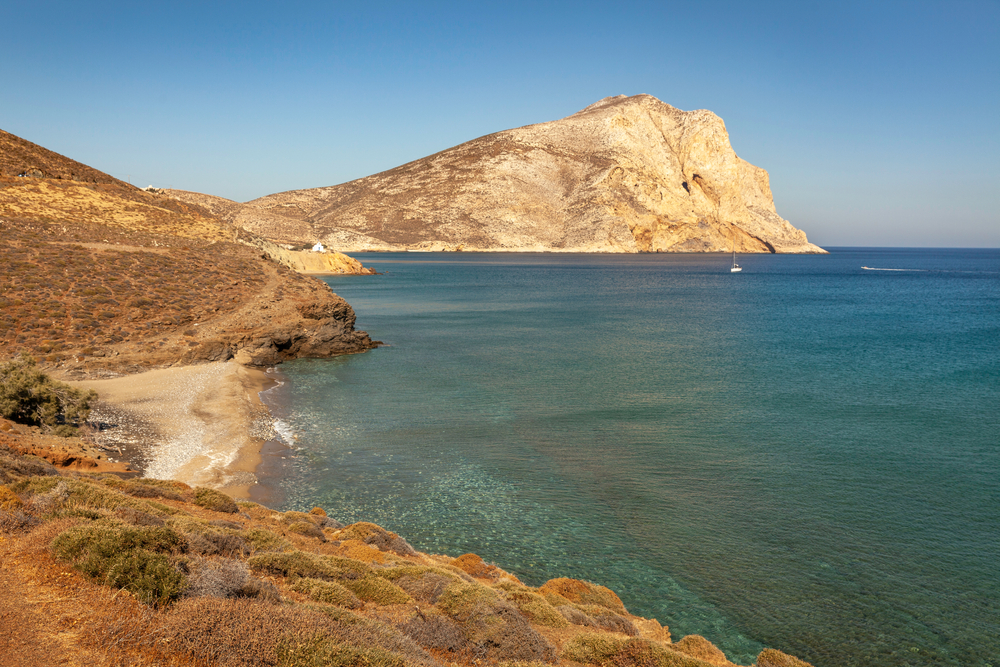
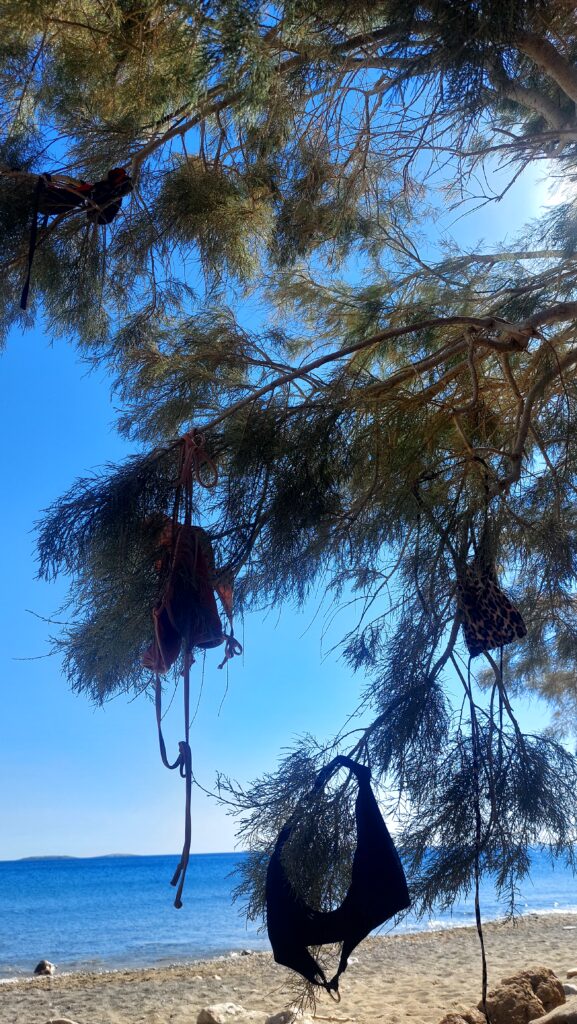
There’s something almost therapeutic about Anafi’s beaches. They’re wild yet peaceful, windswept yet welcoming. Sun-warmed sand, tamarisk trees offering welcome patches of shade, and impossibly clear water invite you to do something increasingly rare: slow down without even realising it.
Kleisidi is the island’s easiest beach to reach. Perched just above the sand, Mule and the Pig sets the mood with laid-back afternoon DJ sessions and beach parties that never lose their effortlessly unpretentious feel.
Roukounas is the soul of Anafi. This is where the island’s free spirit comes alive. Part of the beach is still home to free campers, while others spend their days stretched out beneath the tamarisks, reading, napping or simply gazing out at the sea. Nobody seems to be in a hurry—and that’s exactly the point.
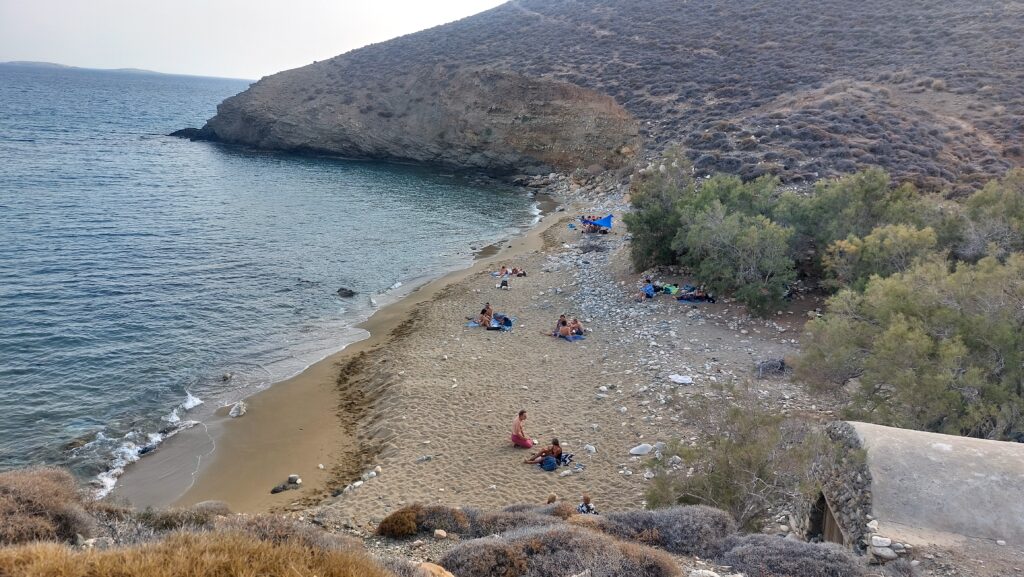
If you’re craving more solitude, lace up your walking shoes and head for Katsouni, Vagia, Agioi Anargyroi or Katelimatsa. Anafi’s most beautiful beaches aren’t simply found—they’re earned. And somewhere along the way, you realise that the walk is just as rewarding as the swim.
Monolithos: The Island’s Most Rewarding Hike
Monolithos is the image that stays with you long after you’ve left Anafi.
The second-largest monolith in Europe after Gibraltar rises dramatically above the island like a monumental natural sculpture. The hike to the Monastery of Kalamiotissa is far easier than it looks. After the first few steep minutes, the trail settles into a gentle rhythm, while the views unfold with every step, revealing an endless expanse of Aegean blue.
I was lucky enough to wake up to the sight of Monolithos every morning from my window. I left with a promise to myself: next time, I’ll hike up there to spend a night beneath the stars.
An Island with a Wine Story to Tell
One of Anafi’s biggest surprises lies in its vineyards.
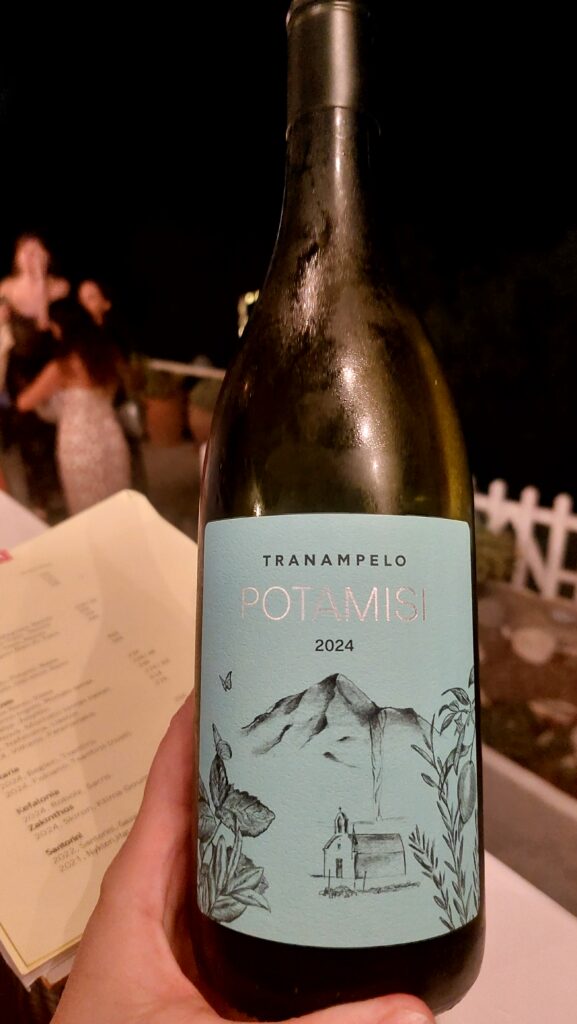
Scattered across tiny stone terraces, almost hidden from the island’s relentless winds, miniature vineyards produce wines with remarkable character—proof that even the driest corners of the Cyclades can yield something extraordinary.
Winemaker Stefanos Michalis, of Flamourou Estate, has quietly created one of the Aegean’s most fascinating micro-wineries. Alongside Assyrtiko, he cultivates indigenous varieties such as Fokiano, Mavrotragano and Mandilaria, producing wines that capture the island’s rugged terroir.
And then there’s Gaidouria. While the word is commonly used in Greek to describe someone behaving like a “donkey”—stubborn, rude or inconsiderate—on Anafi it’s something entirely different: the name of a rare local grape variety that’s well worth seeking out.
Before you leave, don’t miss the island’s honey. Light, floral and delicately aromatic, it seems to capture the very essence of Anafi’s sun-drenched landscape in every spoonful.
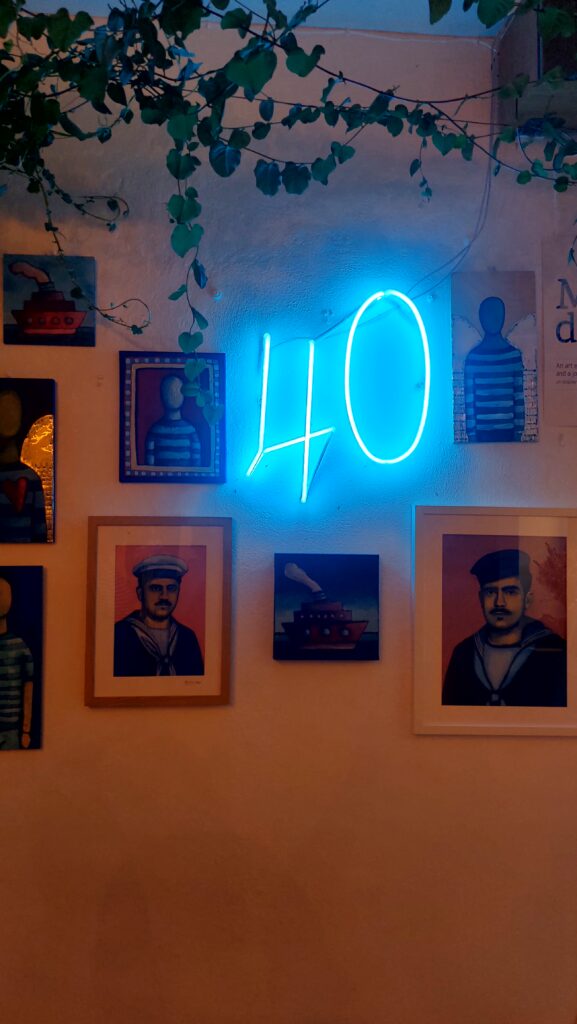
Where the Regulars Eat
If there’s one thing Anafi’s returning visitors know, it’s where to eat.
At Margarita, traditional island recipes are reimagined with a contemporary touch, striking a perfect balance between creativity and authenticity.
For the freshest seafood, head to Armenaki, where one of Chora’s most beautiful terraces overlooks the endless blue of the Aegean.
Liotrivi remains a favourite for beautifully cooked local dishes and fresh fish, while To Steki is one of those places that inevitably finds its way onto the itinerary of everyone who returns to Anafi summer after summer.
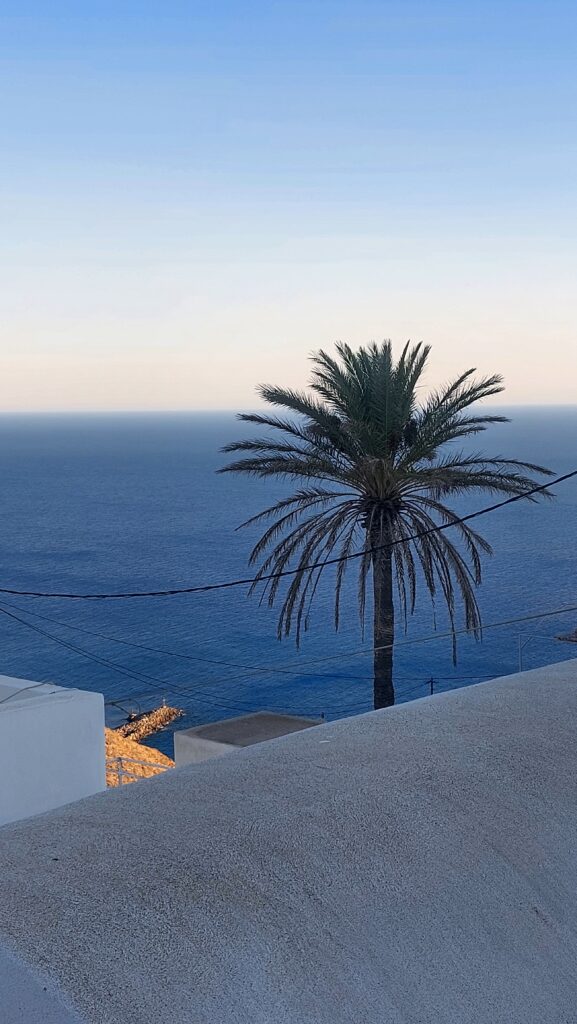
The Island Born from Light
According to Greek mythology, the Argonauts were sailing home from Colchis when they were caught in a violent storm. As their ship battled the waves, Jason prayed to Apollo for salvation. The god answered by shooting a blazing arrow across the sea, illuminating the darkness and revealing a small island where the Argonauts found refuge.
That island was Anafi.
Legend has it that its name comes from the Greek verb anafaino—”to reveal” or “to appear”—because it emerged from the darkness, bathed in Apollo’s light.
Perhaps that’s why the light feels different here even today.
Anafi’s Best-Kept Secret
I don’t know if Anafi will stay like this forever. It’s already changing. More rooms, more visitors, better infrastructure. And yet, as you spend an evening in the village square, stroll towards Roukounas with a towel slung over your shoulder or watch the sun rise from Mandres, you realise that the island’s true magic has never been about its landscapes. It’s about its people—and the unhurried rhythm of life they share.
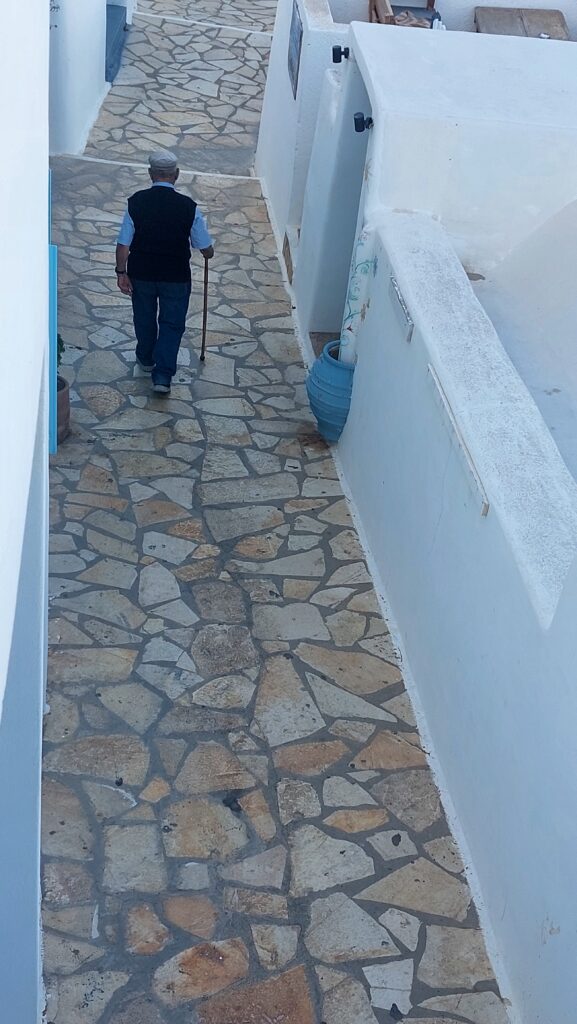
Anafi is one of the few places where, after just a few days, you stop feeling like a visitor. You start greeting people by their first names, bump into the same familiar faces from beach to taverna to bar, and find yourself becoming, however briefly, part of a small community.
Perhaps that’s Anafi’s greatest secret. It doesn’t simply make you fall in love with an island. It makes you long for a way of life you thought had disappeared with the old Cyclades.
LOCAL SECRET
Anafi’s bus is much more than public transport. It’s where you’ll meet half the people you’ll end up sharing drinks with later that evening in the village square. By the time you leave the island, chances are they’ll be greeting you by your first name.
DON’T MISS
If Mandres finally calls it a night and you’re still wide awake, make your way to Koursaros for an ice-cold beer just before sunrise. It’s one of those simple moments that explains why Anafi’s nights have a habit of turning into mornings.