
From Ano Lechonia to Milies, Pelion’s historic narrow-gauge train winds slowly through 16 kilometers of untamed nature, weathered stone, and old-world railway magic
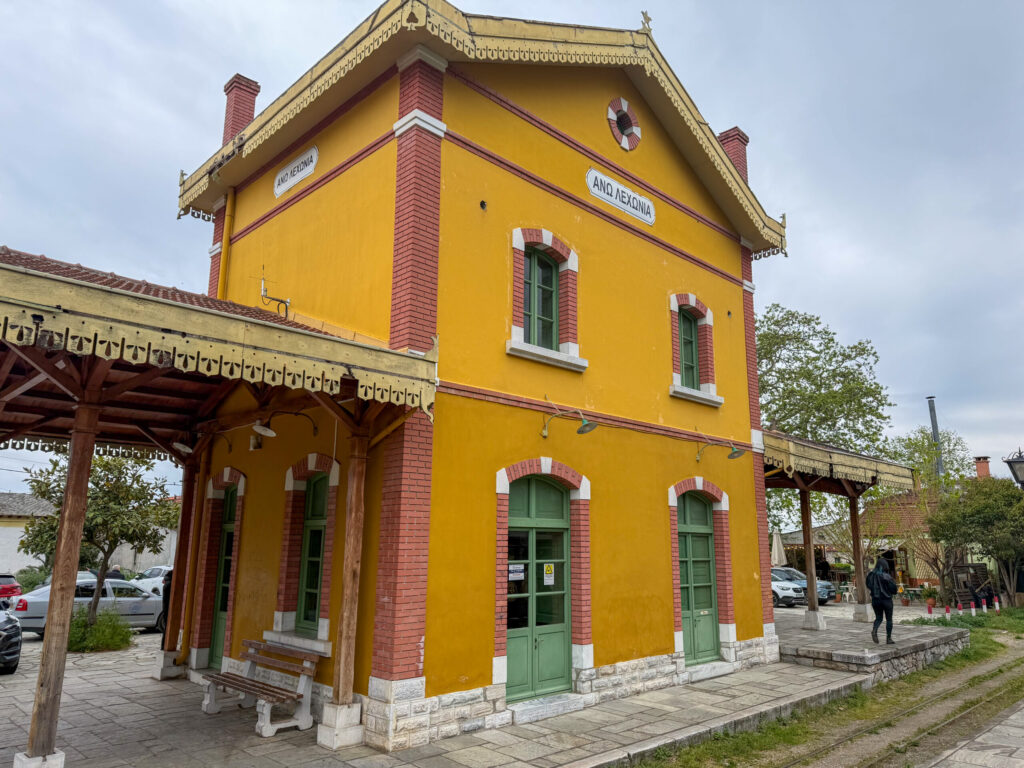
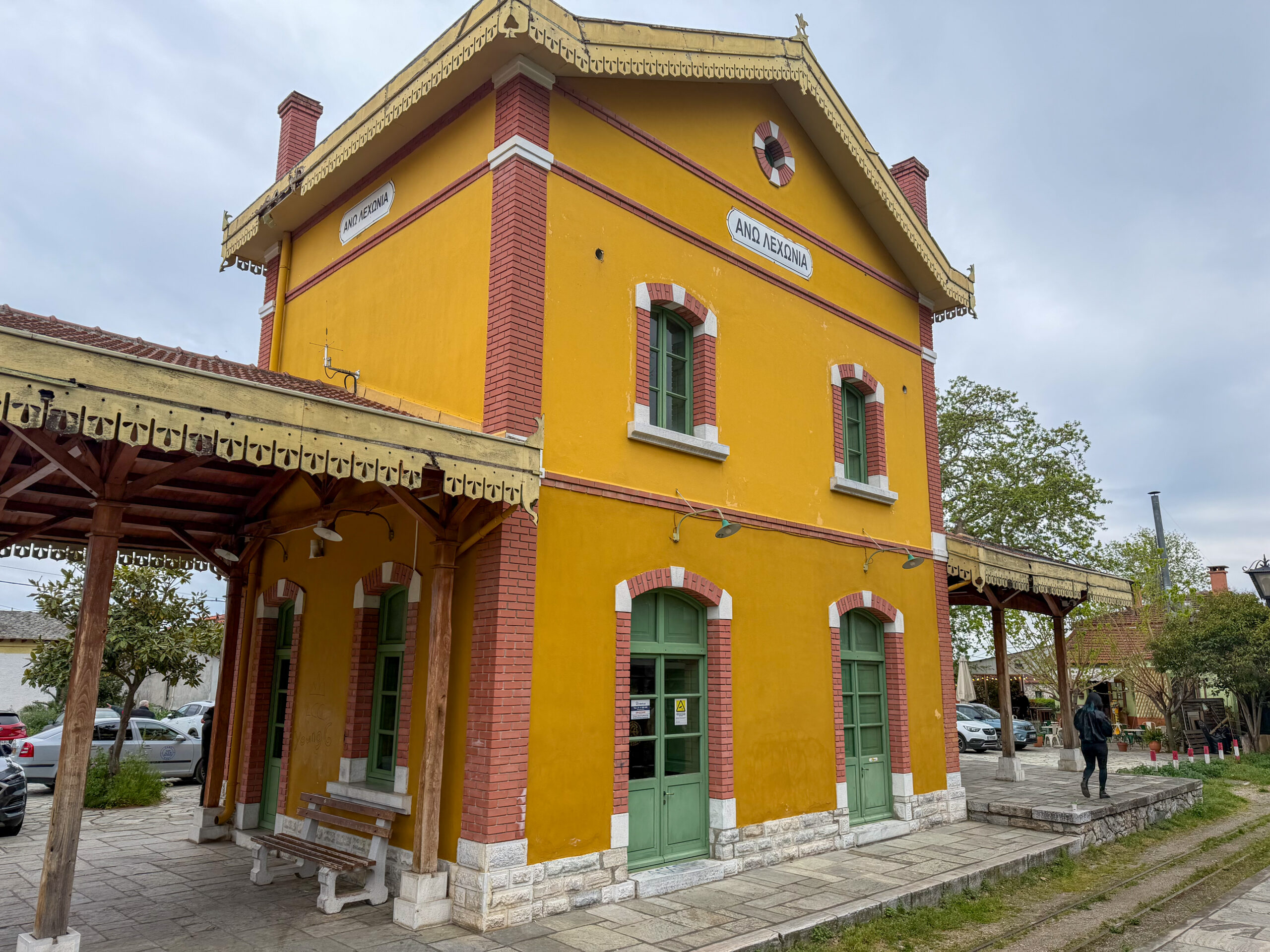
We set off from Ano Lechonia with a morning coffee in hand and that crisp, mountain freshness that always makes Pelion feel slightly more awake than you are. The small station, bathed in warm ochre tones, seemed to preserve a fragment of another era—much like the vintage carriages waiting patiently on the tracks.
The 10:00 AM departure was already at capacity. A mix of locals, international travelers, families, and couples sat with phones at the ready, yet there was an almost childlike wonder in their eyes, as if they were expecting something far beyond a simple train ride.
Settling onto the wooden bench seats, facing one another inside a carriage that still breathes its century-old soul, the anticipation was palpable. The legend of “Moutzouris” (the “smudgy” one) had already set the bar high, but the route itself quietly -or rather, not so quietly- surpasses it. It begins with the rhythmic clatter of metal on rails, the nostalgic blast of the horn before every bend, and that steady, hypnotic sway that instantly shifts your mind into a slower gear.
As the station fades into the distance, the train disappears into a world of deep green. It brushes past ancient tree trunks, slips through cool, shaded glades, and then opens up to vistas that seem to stretch toward the horizon.
Pelion’s “little train” is far more than a tourist attraction; it is a living monument. Built between the late 19th and early 20th centuries to connect the mountain villages with the port of Volos, the project was overseen by the Italian engineer Evaristo De Chirico. He was the father of the surrealist master Giorgio De Chirico, who would later weave these very trains and stations into the haunting visual mythology of his paintings.
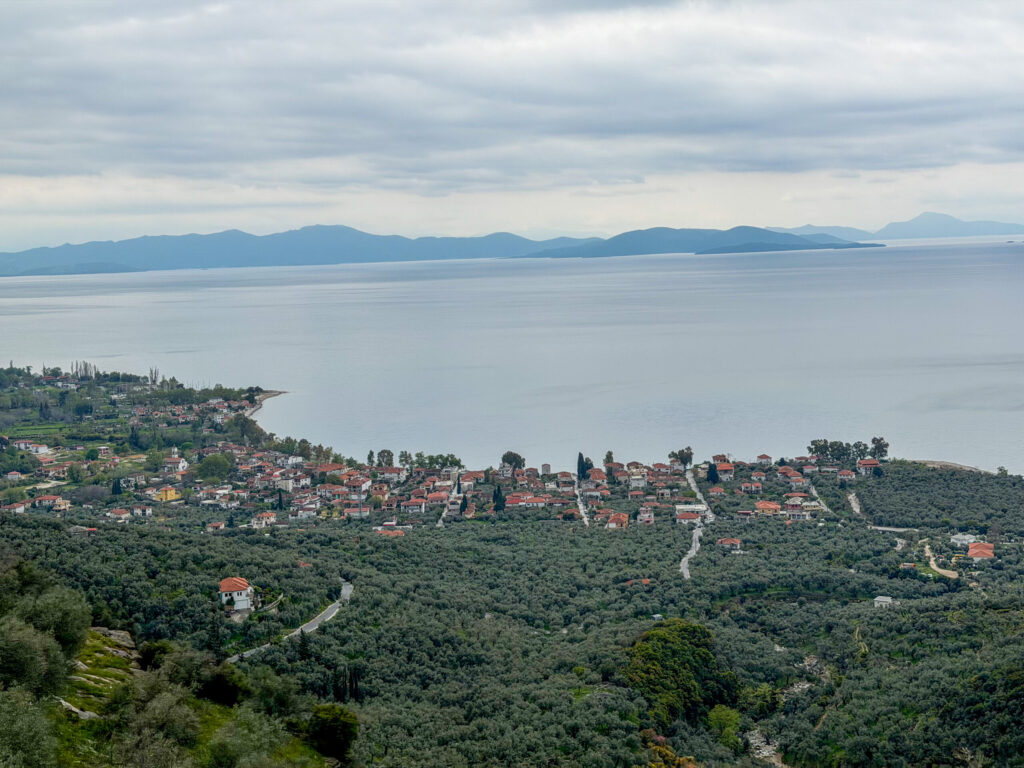
During the 90-minute journey, Moutzouris reveals why Pelion can never be captured in a single image. You pass stone-built settlements clinging to the slopes, silver-green olive groves unfolding in waves, and red-tiled roofs emerging from the canopy. Moving through a tapestry of plane trees, chestnuts, and dense forest, the shimmering curve of the Pagasetic Gulf below serves as a constant reminder of the mountain’s dual soul: half-wild highland, half-aegean breeze.
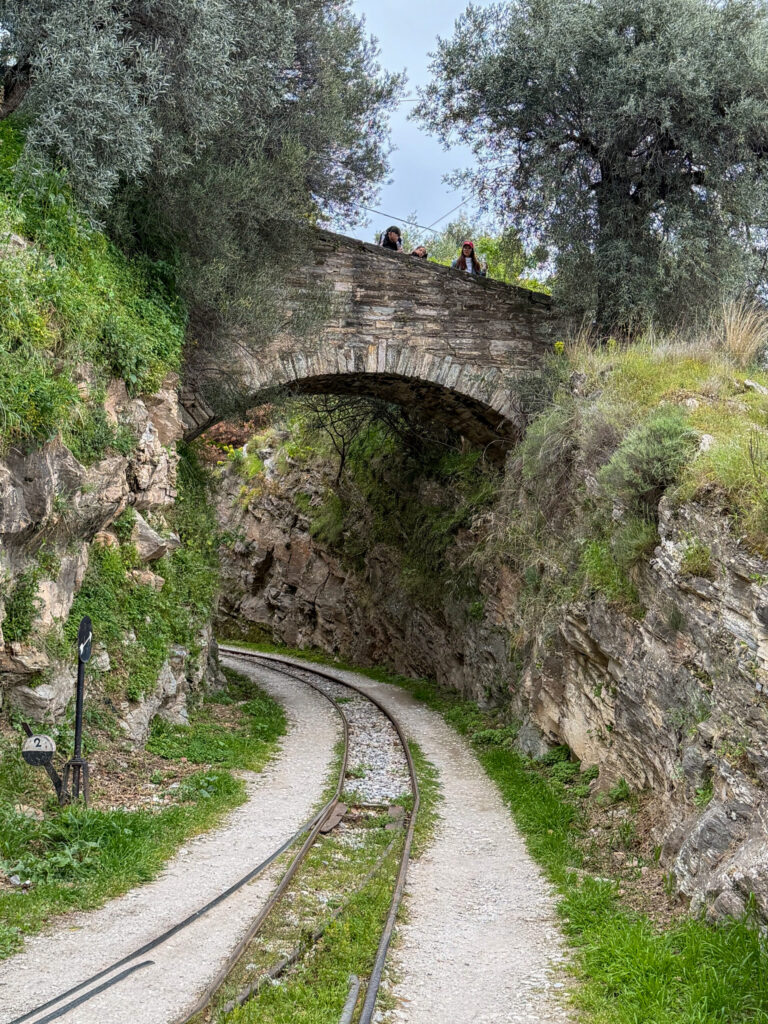
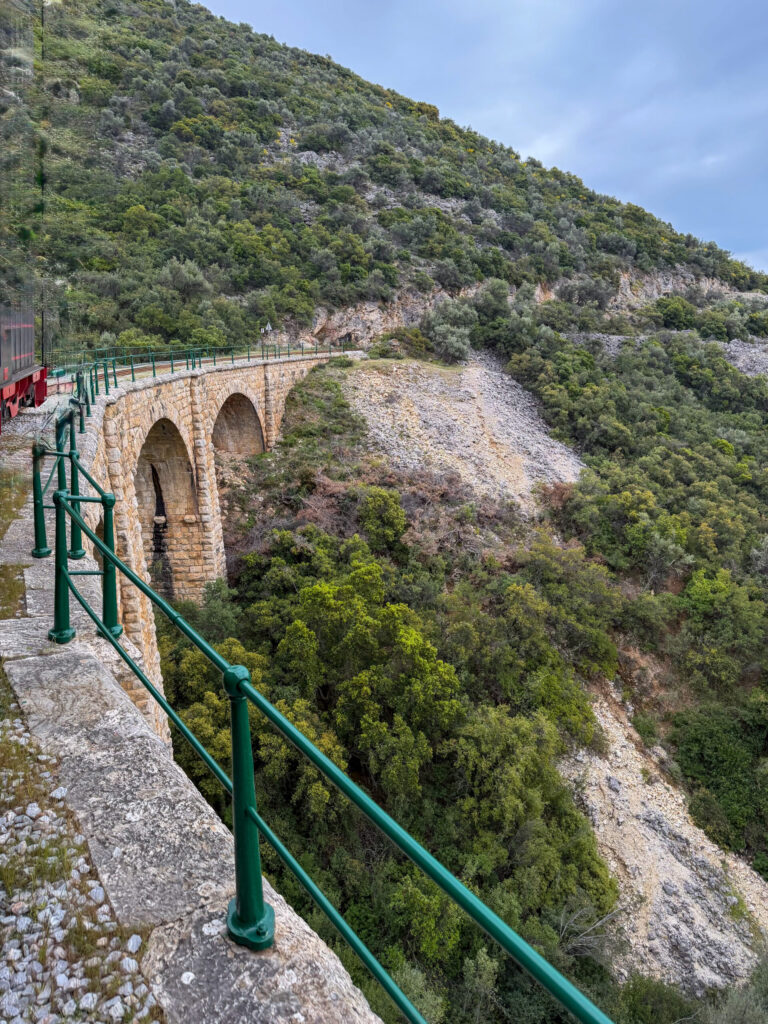
The route is also a masterclass in harmonizing engineering with architecture. The train crosses elegant arched bridges and stone passages carved directly into the landscape. While the stone bridge of Kalorema is a standout, the true climax comes just before Milies: the impressive Taxiarchis (or De Chirico) Bridge. Here, for a few breathtaking seconds, you feel suspended in mid-air above the gorge.
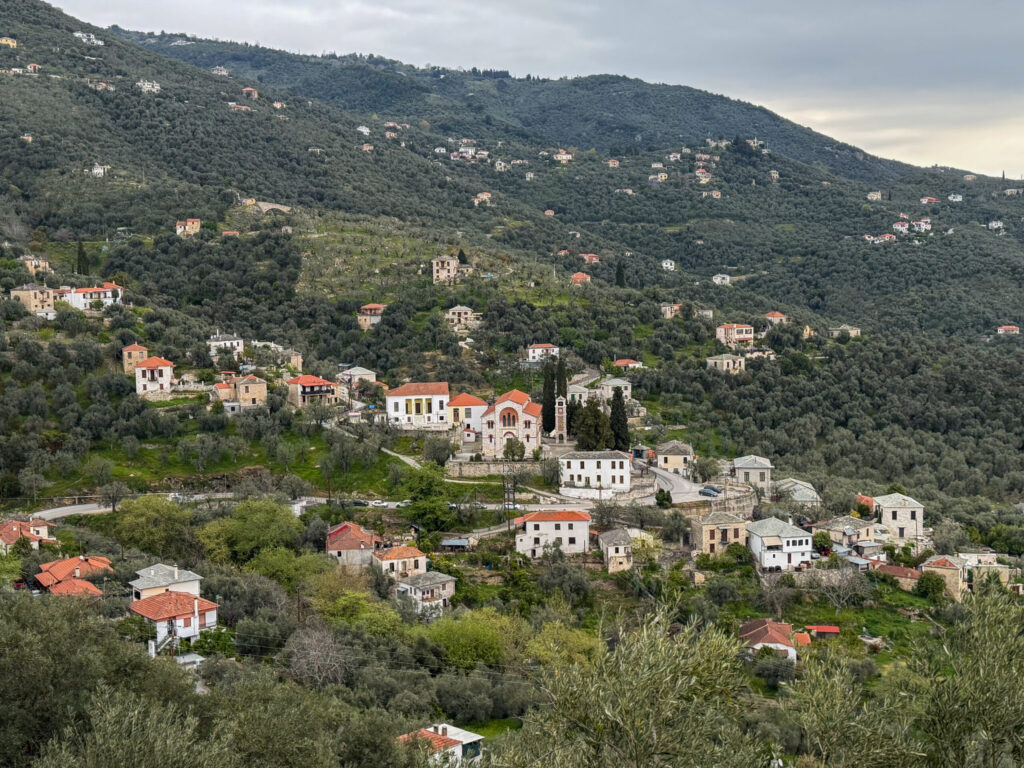
Arriving in Milies, the journey doesn’t so much end as it evolves. From the station, a traditional cobbled path (kalderimi) beckons you toward the village square, a natural continuation of a route that didn’t just take you from one place to another, but through time itself.

