

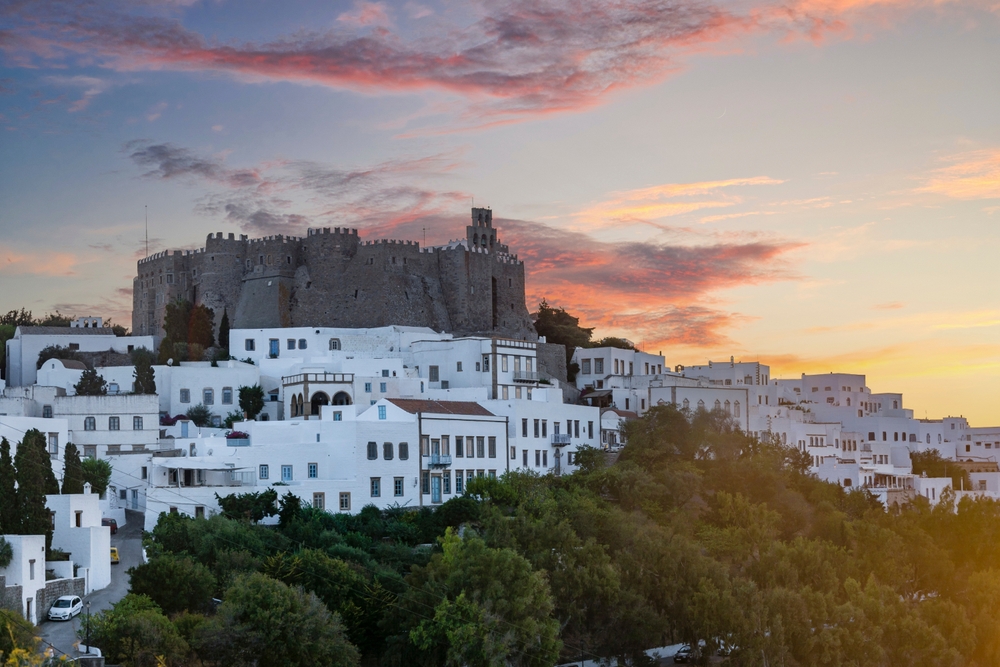
From cosmopolitan Corfu to mystical Patmos, and from theatrical Chios to heartbreakingly beautiful Folegandros, these are eight Greek islands best experienced in spring — and even more so at Greek Easter, when the season’s light, fragrance and sense of renewal meet traditions that are still profoundly alive. In these places, Easter is not simply a celebration. It is something deeper, more atmospheric, almost existential.
1. Corfu: The Grand Dame of Greek Easter
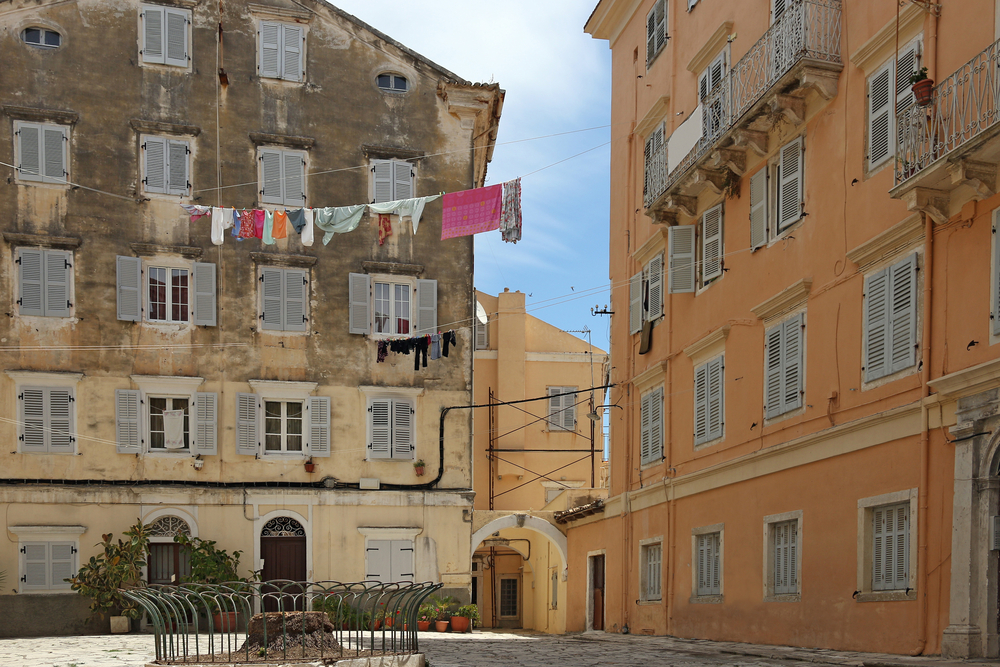
In spring, Corfu reveals a softer, greener, more fragrant side of itself, with the old town at its most enjoyable before the full rush of summer arrives. This is when the island reminds you why it remains one of the Ionian’s most theatrical settings. If there is one place in Greece where Easter feels almost sovereign, it is Corfu. On Holy Saturday morning, at exactly 11 a.m., the First Resurrection is marked by the thunderous crashing of the botides: large clay pots filled with water, adorned with red ribbons, are hurled from the balconies of the old town and smash onto the streets below to the cheers of the crowd. Earlier that same morning, the procession of the relics of Saint Spyridon unfolds to the sound of the island’s famed philharmonic bands, whose mournful marches — including the haunting Amleto — create an atmosphere of rare emotional power. Before leaving, make sure to taste the traditional fogatsa and colombina, two of Corfu’s Easter staples.
2. Hydra: A Sacred Ritual by the Sea
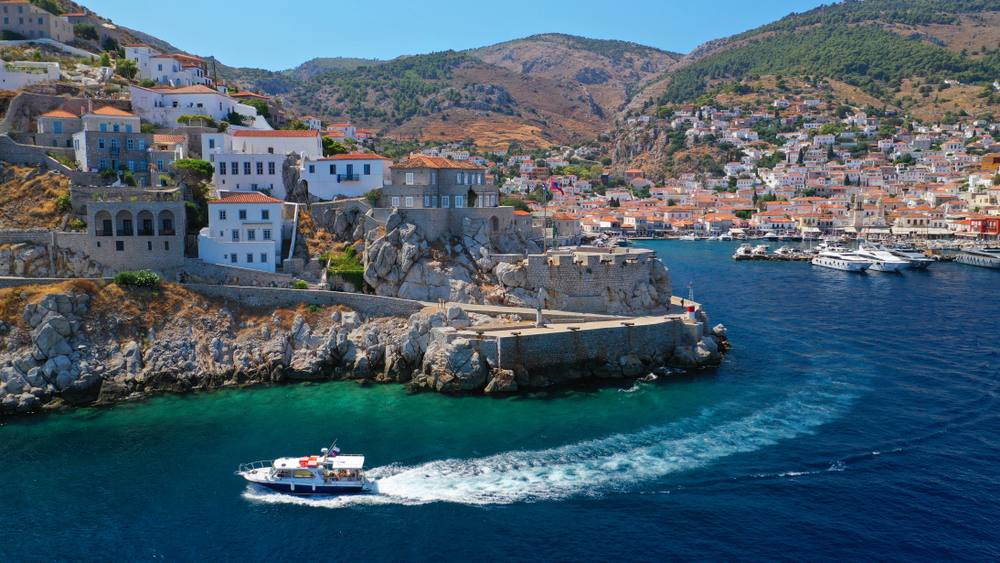
Spring is arguably Hydra at its most beautiful: hushed, elegant, and suspended in that rare mood of timelessness the island does so well. The weather is ideal for long walks to Kamini or Vlychos, for slow mornings by the harbor, and for savoring the island before summer fills its stone lanes. At Easter, Hydra offers one of the most memorable images in the Greek islands. On the evening of Good Friday, in Kamini, the Epitaphios enters the sea in one of Greece’s most singular and photogenic Easter customs. The ritual is symbolically linked to the blessing of the waters and to a prayer for sailors and their journeys — a gesture entirely in keeping with Hydra’s maritime soul. The island’s serenity and noble architecture create a setting that feels almost painterly. On Easter night, the harbor glows with fireworks while illuminated boats sound their horns, setting the rhythm of celebration.
3. Chios: Fire, Fragrance and Ritual
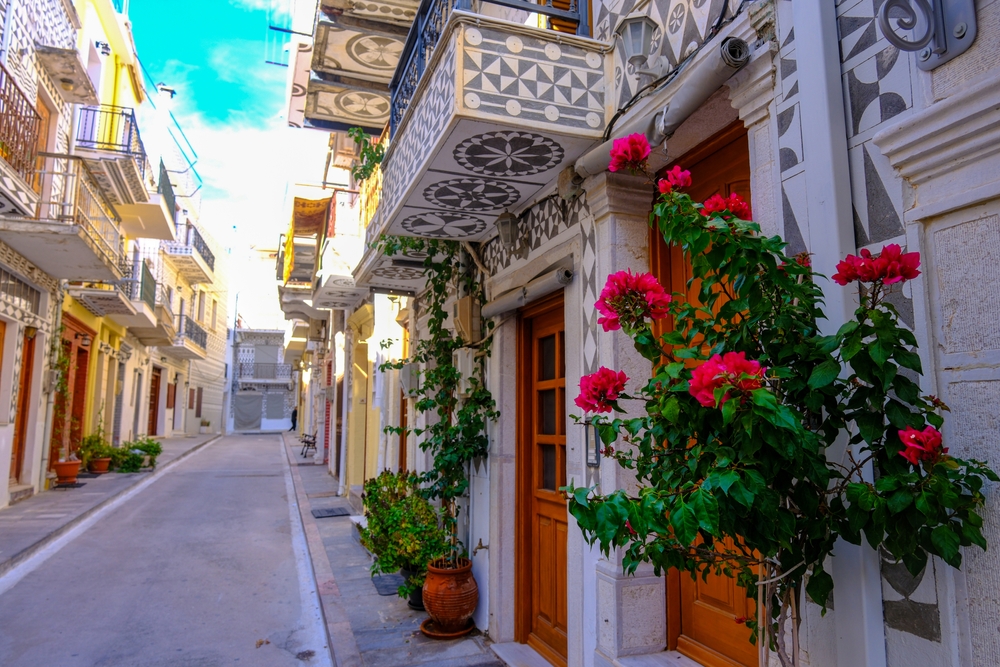
Chios in spring has a beauty that feels quietly compelling rather than immediately obvious: orchards, the scent of mastic, villages shaped by a medieval past, and a landscape best understood through presence rather than spectacle. And yet at Easter, the island becomes exactly that — spectacle, in the most dramatic sense. On Holy Saturday night, the Rouketopolemos, or rocket war, in Vrontados sees the parishes of Agios Markos and Panagia Erithiani launch thousands of homemade rockets into the sky in a breathtaking blaze of light and sound. It is one of the most extraordinary Easter customs in Greece. At the same time, spring on Chios is softened by the island’s famous lalades, the wild tulips that spread vivid carpets across the countryside, while the Kampos is thick with the fragrance of citrus and mastic.
4. Patmos: Where Easter Becomes Contemplation
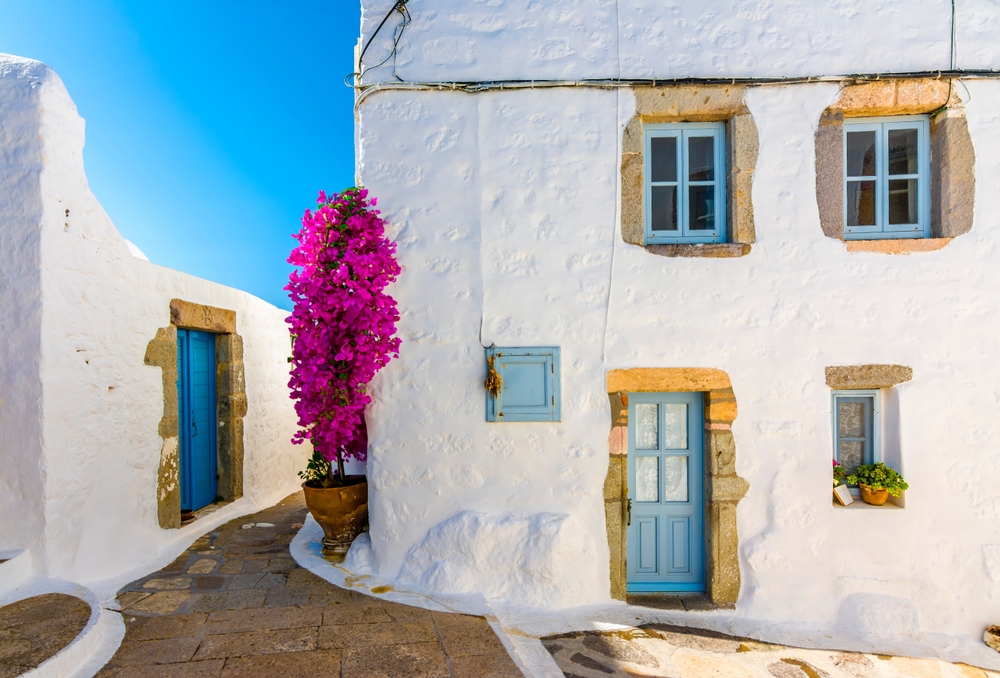
Patmos, with the austere grace of Chora, the monastic complex of Saint John the Theologian, and the inward-looking spirituality that seems to permeate the island, is deeply moving even outside the festive season. At Easter, however, the “Island of the Apocalypse” takes on an even greater sense of solemnity. Its defining moment is the Ceremony of the Washing of the Feet on Holy Thursday morning, held in Xanthos Square in Chora: a ritual reenactment of the Last Supper, during which the abbot symbolically washes the feet of monks, recalling Christ’s gesture to His disciples. The atmosphere of devotion at the Monastery and the Cave of the Apocalypse is palpable, while the Resurrection service takes place without microphones or fireworks, allowing the chants to echo through the narrow lanes of medieval Chora. Beneath the clear spring light, with the Aegean stretching beyond, Patmos offers a rare kind of stillness — one that feels genuinely spiritual.
5. Naxos: A River of Firelight
Naxos is one of those islands that rewards more than one reading: fertile and earthy, rich in mountain villages, layered traditions and a history that reaches far beyond the clichés of the classic summer destination. At Easter, it glows in a different register altogether. In Eggares, Galini and Melanes, reeds are lit on Good Friday as the Epitaphios passes through, creating an atmosphere of almost primal mysticism. In Melanes, locals carry flaming reeds known as perifanes, forming an evocative river of light through the village. Yet the Easter experience is only part of Naxos’s springtime appeal. The island also invites you inward — into its villages, olive groves, footpaths and Byzantine towers, and toward the monumental Archaic Kouroi of Apollonas and Melanes, reminders of Naxos’s deep artistic legacy.
6. Kythnos: The Easter Swing
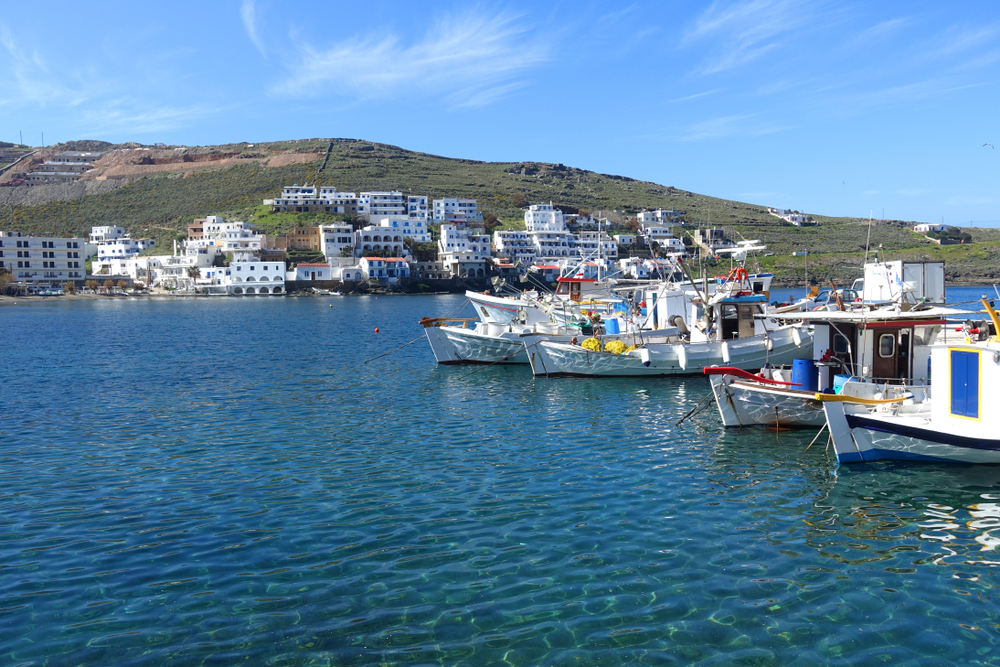
Kythnos has the rare ability to make you feel wonderfully removed from everything, even though it is one of the nearest Cycladic escapes from Athens. In spring, before the island shifts into its summer rhythm, it feels especially gentle: dry-stone terraces, flower-covered hillsides, walking paths and a Chora that still moves to the quiet pulse of community life. Its most characteristic Easter custom is the Kounia tis Lambris, the Easter Swing, revived on Easter Monday in Chora. A large swing is set up and decorated with flowers, and boys and girls sway upon it, recalling an old custom linked to courtship and the public joy of communal life. The tradition survives in an atmosphere of music, dancing and local treats, including Kythnos’s beloved cheese pies.
7. Syros: A Lesson in Coexistence
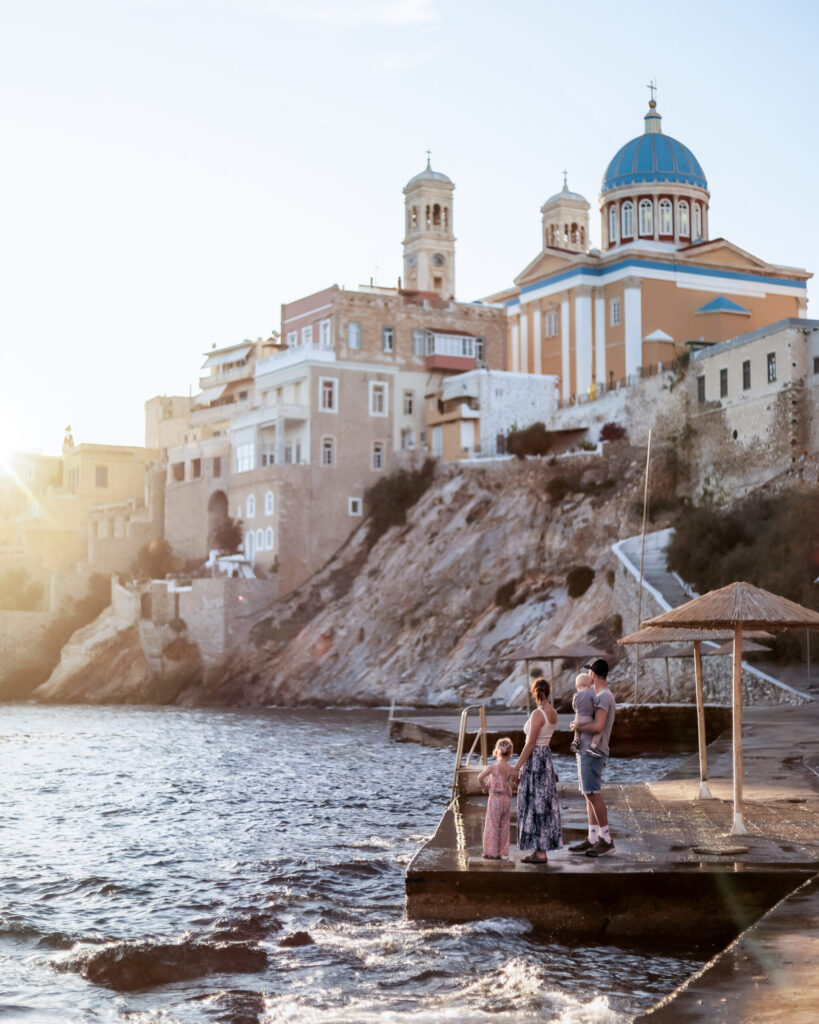
Syros may be the most urban of the Cycladic islands, but that is exactly where its distinction lies. Ermoupoli, with its neoclassical facades, aristocratic Vaporia quarter and unmistakable civic grandeur, has little in common with the stereotypical image of the Cyclades, and yet it expresses island culture in its own singular way. At Easter, Syros becomes especially moving, as Orthodox and Catholics share the same festive landscape in rare harmony. On Good Friday, the Epitaphioi from different churches move through the city and meet at central points in Ermoupoli, culminating in Miaouli Square in a spectacle of powerful symbolism and genuine emotional resonance. A few days earlier, the Hymn of Kassiani at the imposing church of Saint Nicholas lends Holy Week an added layer of gravity — devotional, dramatic and deeply atmospheric. On Syros, Easter is not only a religious observance, but also a living expression of coexistence, elegance and cultural continuity.
8. Folegandros: The Island as Procession
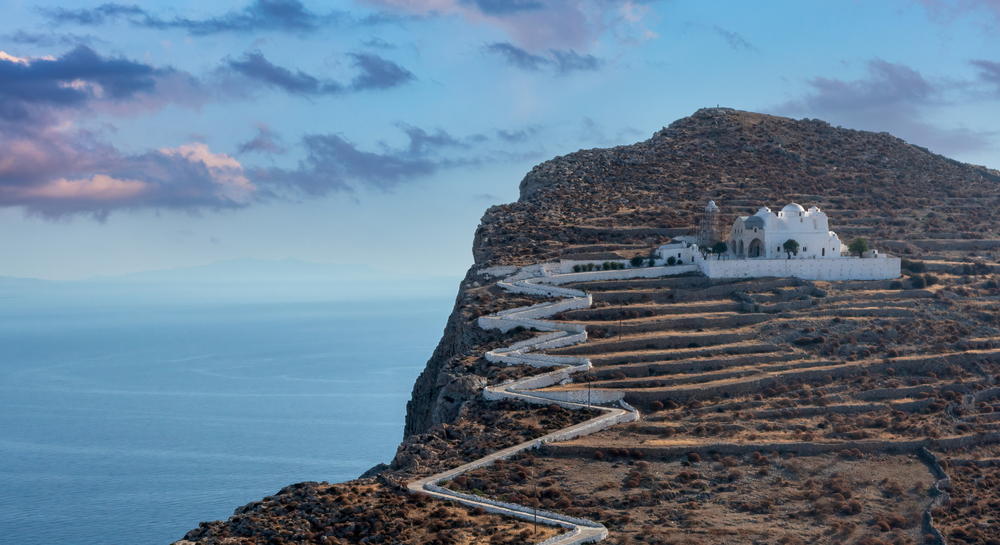
Folegandros — all cliff, sky and a Chora poised dramatically above the void — possesses a beauty that is stark, unembellished and unforgettable. At Easter, the island feels almost like a secret collectively held. Its most distinctive custom is the procession of the icon of the Virgin Mary. On Easter Sunday, the icon descends from the cliff and is carried from house to house, with residents opening their doors to receive it and offering tsipouro and traditional pies along the way. Gradually, the entire island becomes a single procession, a single gathering, moving along the paths with the endless blue stretching out on every side.

