
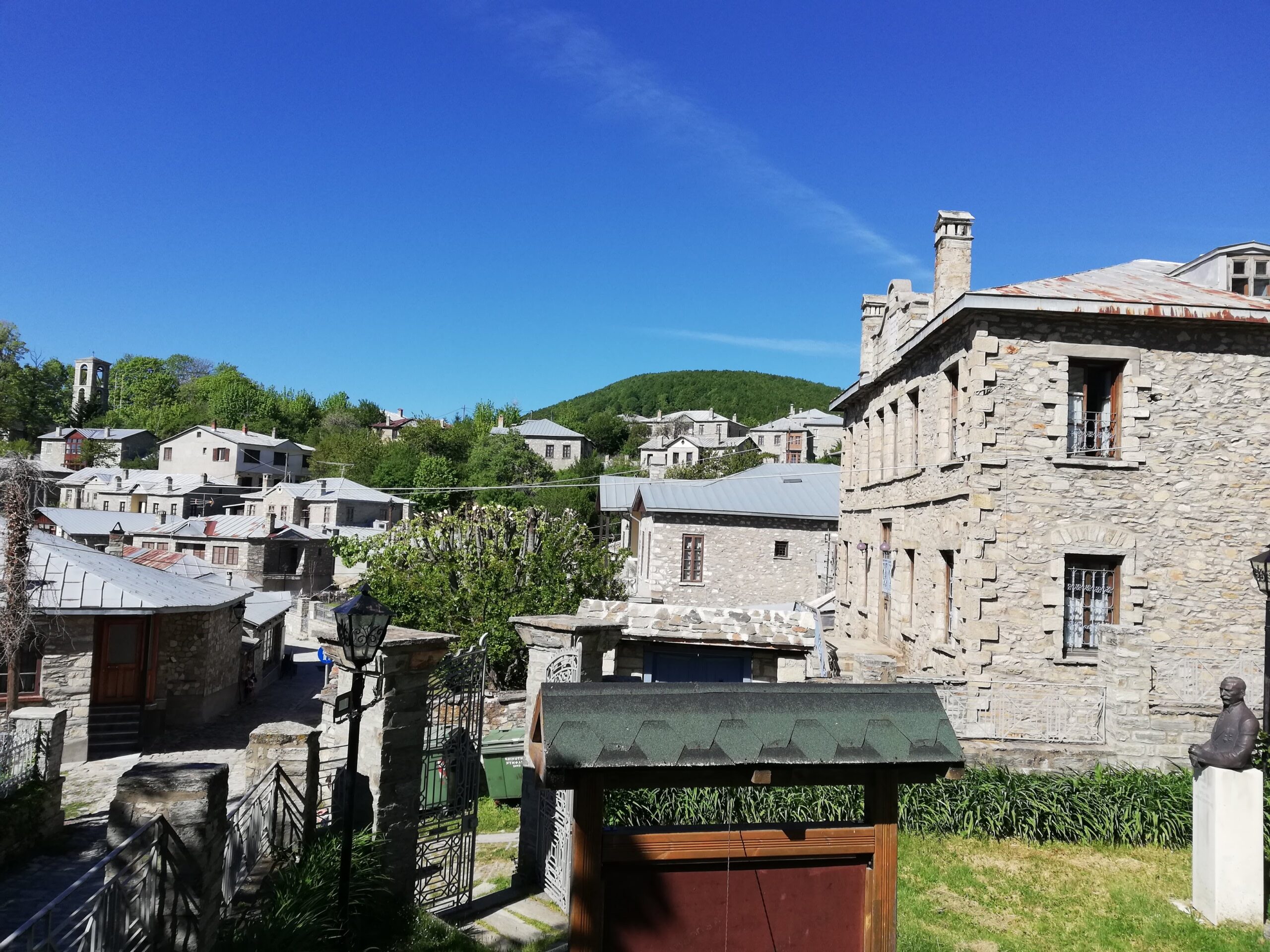
The manor village of Macedonia hospitably recounts its history amid beeches and cobbled lanes.
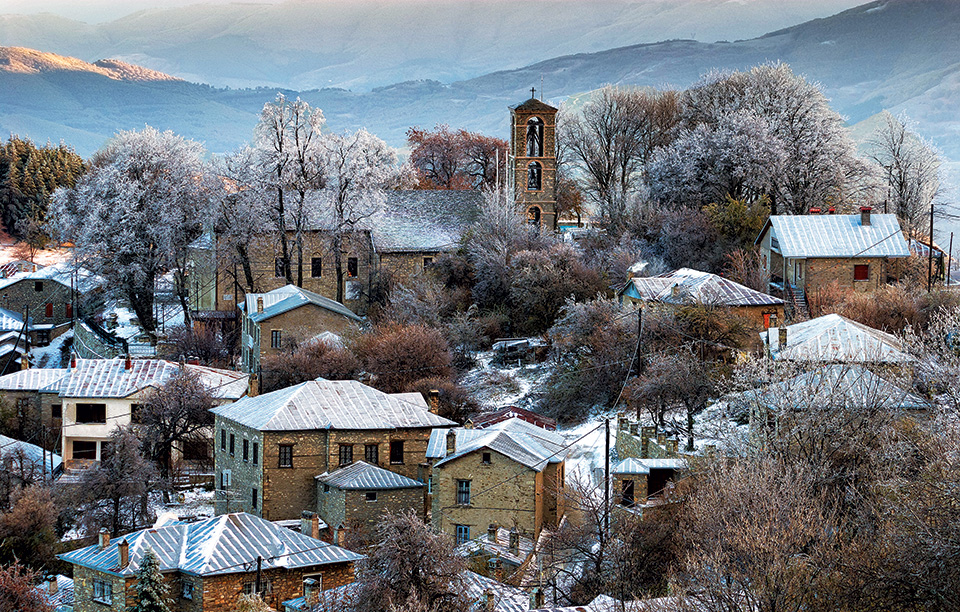
Your first encounter with Nymfaio feels like love at first sight. Perched at 1,350 m in a dense beech forest, the village gleams like a stone jewel: mansions with slate roofs, carefully laid cobbled lanes, courtyards with oleanders, and crisp, crystal air that wakes you from the inside out. It doesn’t take you back to some vague “past”, but to its own years of flourishing—when enterprising Vlach merchants and master silversmiths returned from their travels bringing home wealth, craftsmanship, and new ideas.
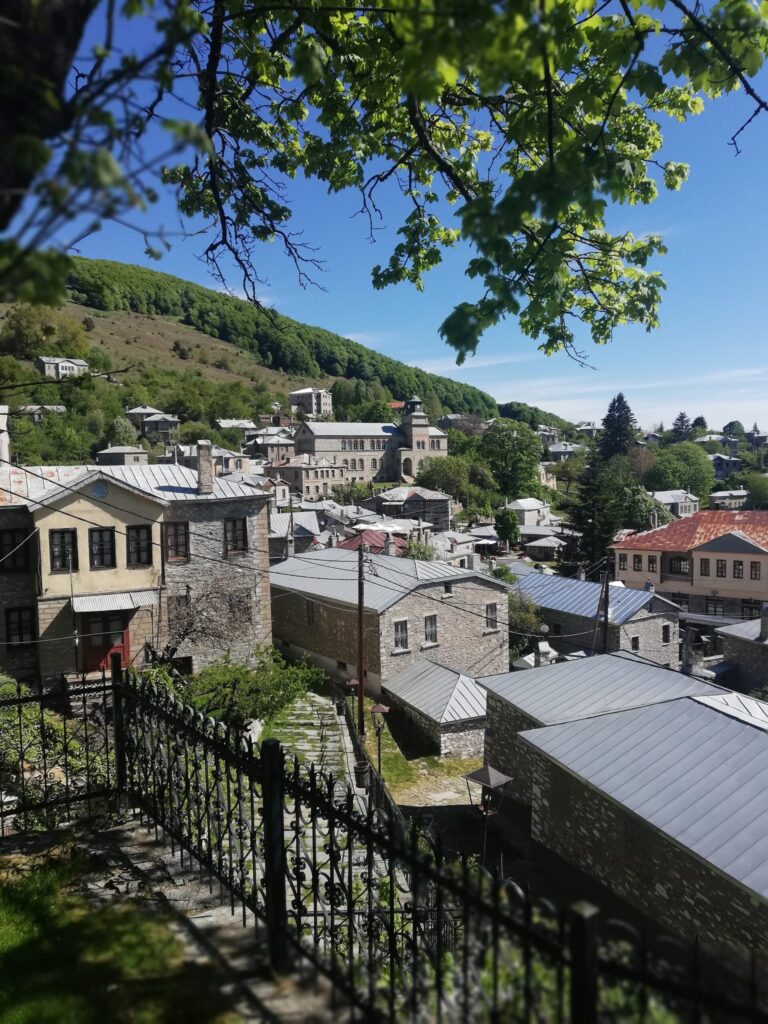
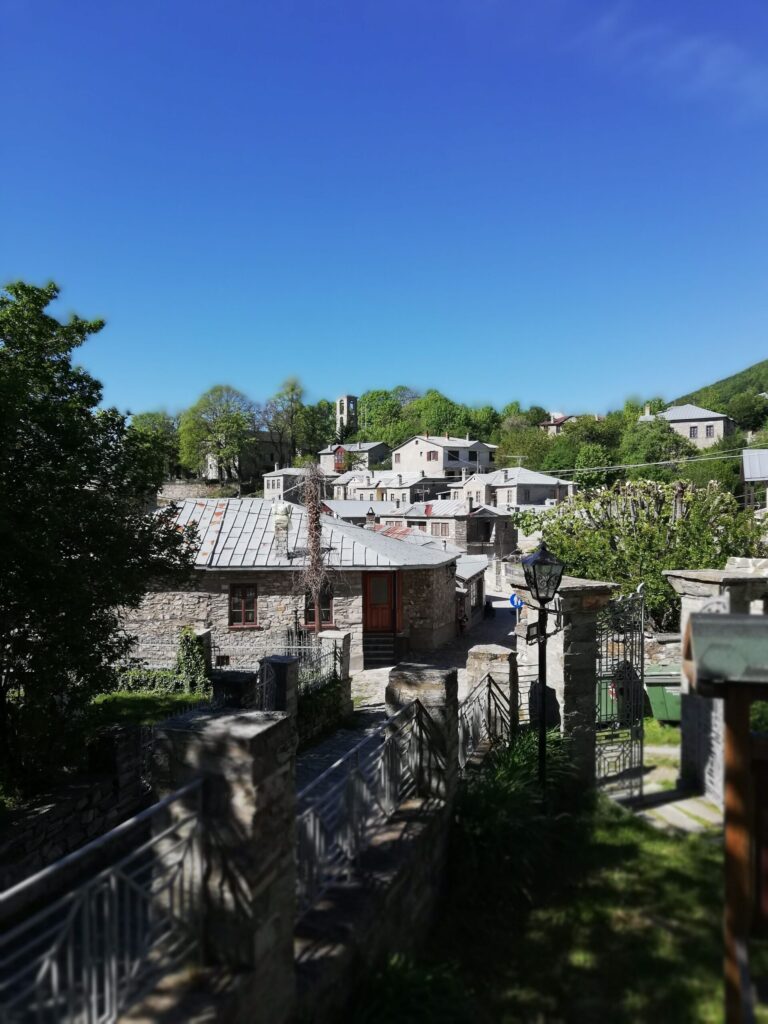
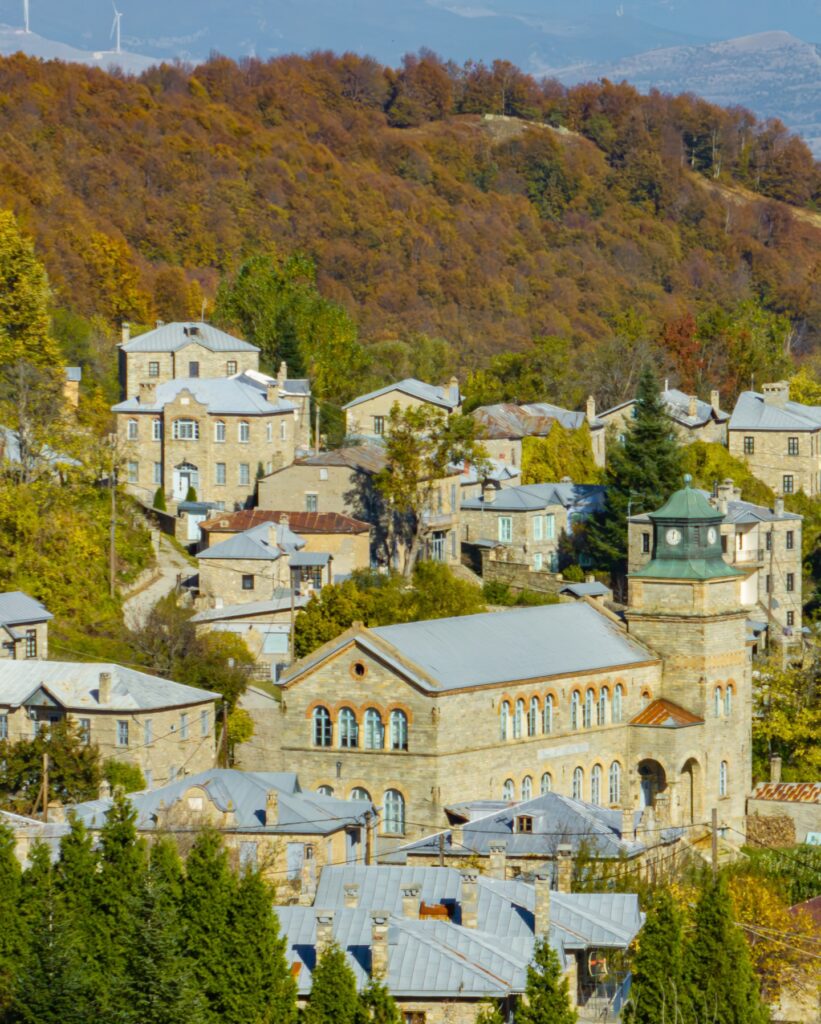
Begin your stroll at the stone-built Nikios School with its clock tower—the village’s emblem—and wander down toward the square. Somewhere along the way you’ll find Café Enderné, perfect for a tasty pause: handmade pie with Florina peppers, “Greka” yogurt topped with spoon sweets, and homemade crêpes. In the forecourt of Agios Nikolaos, with its crystal chandeliers and green marble, you might run into Father Giannis. Just a few minutes with him are enough for a brief lesson in local history and the kind of human stories that keep the village’s heart beating.
Stories of a Name
Its roots run deep. Nomadic Vlachs settled here as early as the 14th century, trading and practicing the art of silversmithing, traveling as far as Egypt and bringing back art and new ideas. The village changed names over time—Niveasta (“Bride,” “Unseen,” “Snowy”) and Neveska—until it officially became Nymfaio in 1928.
Post-war emigration hollowed it out, but in the 1990s the locals took action: they relaid the cobbles, restored manor houses and squares, and breathed life back into the village. That’s why Nymfaio today is no stage set; it’s a living community. The handsome houses aren’t just “backdrops” for hospitality—they are homes with stories.
Nature and Ethos
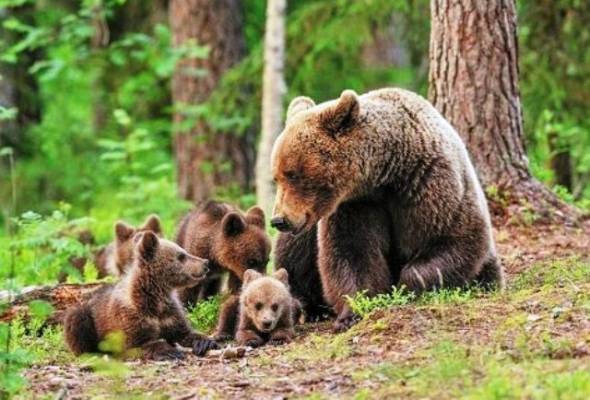
From the village, a stone-paved path leads to Arcturos, the Brown Bear Sanctuary and environmental education center. This is not a zoo; it’s a refuge for bears that could never safely return to the wild. A little further on, near Agrapidia, there is a similar sanctuary for wolves. These are experiences that connect visitors—young and old—to the mountain with respect: not as a spectacle, but as a living ecosystem we’re guests in.
Paths with Personality
Nymfaio is made for walking. Short circular trails unfurl around the village: winter snows whiten the roofs, spring perfumes the forest, summer stays cool while the cities swelter, and autumn gilds the beeches. On the edge of the settlement you’ll find the half-ruined headquarters of Pavlos Melas—quiet corners that whisper stories of resistance and endurance. And if you’re craving a dose of freedom, a ride with the local riding club gives the forest a truly cinematic feel.
Flavours with a Mountain Aroma
Take home local Xinomavro from the wider wine-growing region, along with pulses and herbs from the Women’s Cooperative. They’ll find their place in your pantry, but first they’ll fill your kitchen with the aromas of the mountain.
When to Go
Winter for alpine scenes and firesides, spring for blossoming forest, summer for cool mountain air, autumn for beeches in gold and copper. Mountain weather turns on a dime—dress in layers.

